Novel/Progress Updates!

Updates for my novels and January’s Writing Goal!


Hi all,

Long time no post! I’ve been really busy (read lazy and unmotivated) in the doldrums of January. I continue to be finishing up the last edits to Antioch Burns, and have found two beta readers to double check the changes :-).

In addition, I’ve continued to work in a tiny amount on Iron Tribune, so here’s a tiny bit of what I’ve worked on!

“Oenipons Central Station! Oenipons Central Station! Train will depart in two hours.”

The young tribune shambled to his feet, shaking the sleep from his system. The cold air smelled of oil and grease, but still felt wondrous after enduring hours in the stuffy train car.

“Shoulda opened th’ darned window earlier.” Senior Centurion Gwendyrn grumbled as the noise of their arrival finally woke him. Legionnaires crowded into the passageway, making their way towards the platform. Voices raised in complaint in the passage provided early warning of a visitor.

“Sir, Tribune Caesar, sir?” The youthful voice announced the arrival of the XIII Germania’s newest officer, Nicephorus Theophilus. The junior tribune saluted briskly, unaware of the annoyed stares leveled at him as he blocked the hallway. His loud voice was especially unwelcome to the centurion, who was always slow to wake. Julius sighed inwardly as he set about soothing the youngest son of the Governor of Noricum.

So you can see I have been hard at work (sort of, maybe?)

Anywho, here’s the goal for the rest of January.

Finish edits to Antioch Burns.

Finish Chapter One of Iron Tribune.

I plan to create writing goals all year long. If I follow all my goals, I should have many more completed novels by the end, right?

Right?

Black Friday Sale!

BLACK FRIDAY SALE – ON NOW! CHECK OUT THE POSTING FOR MORE DETAILS!


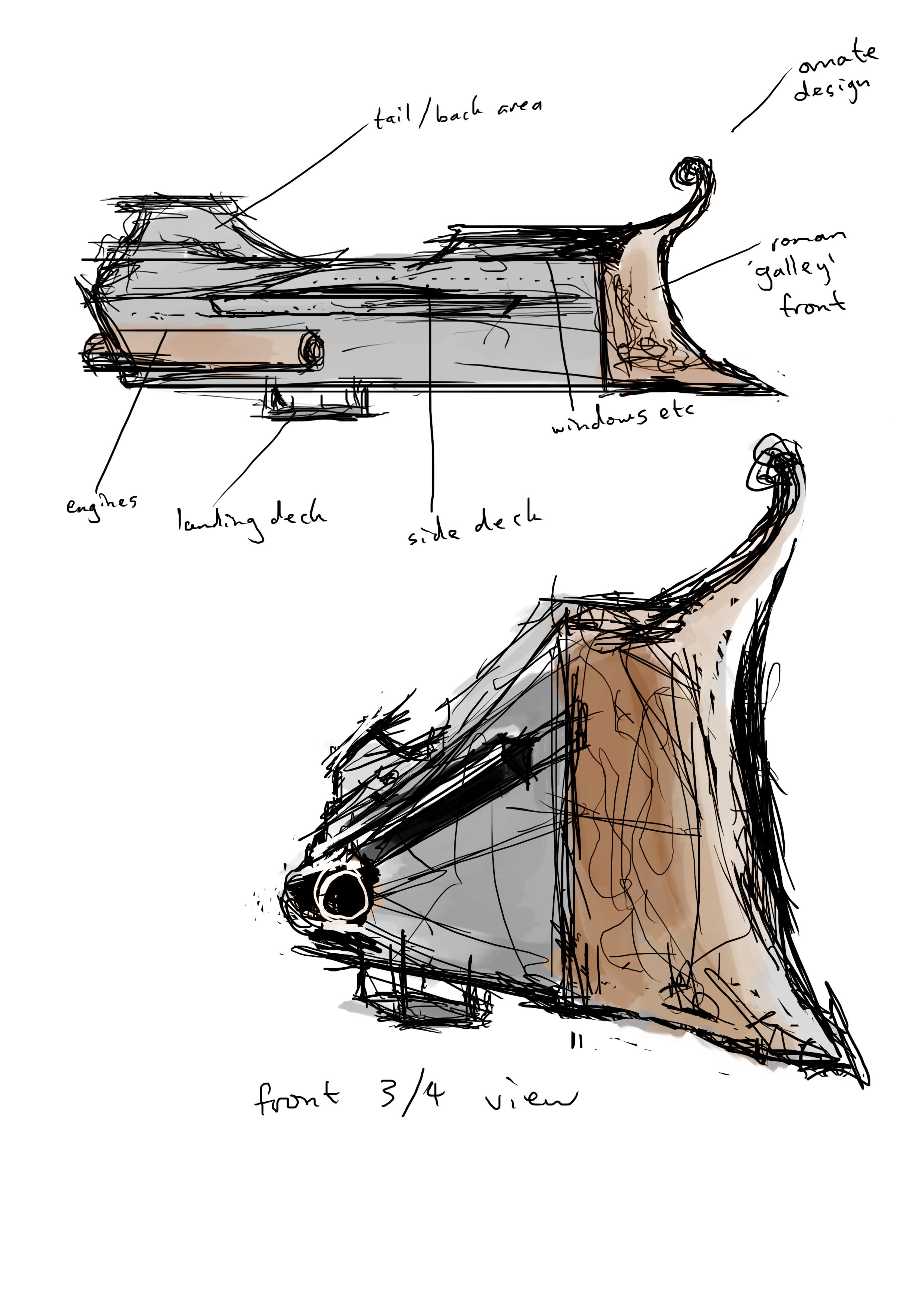
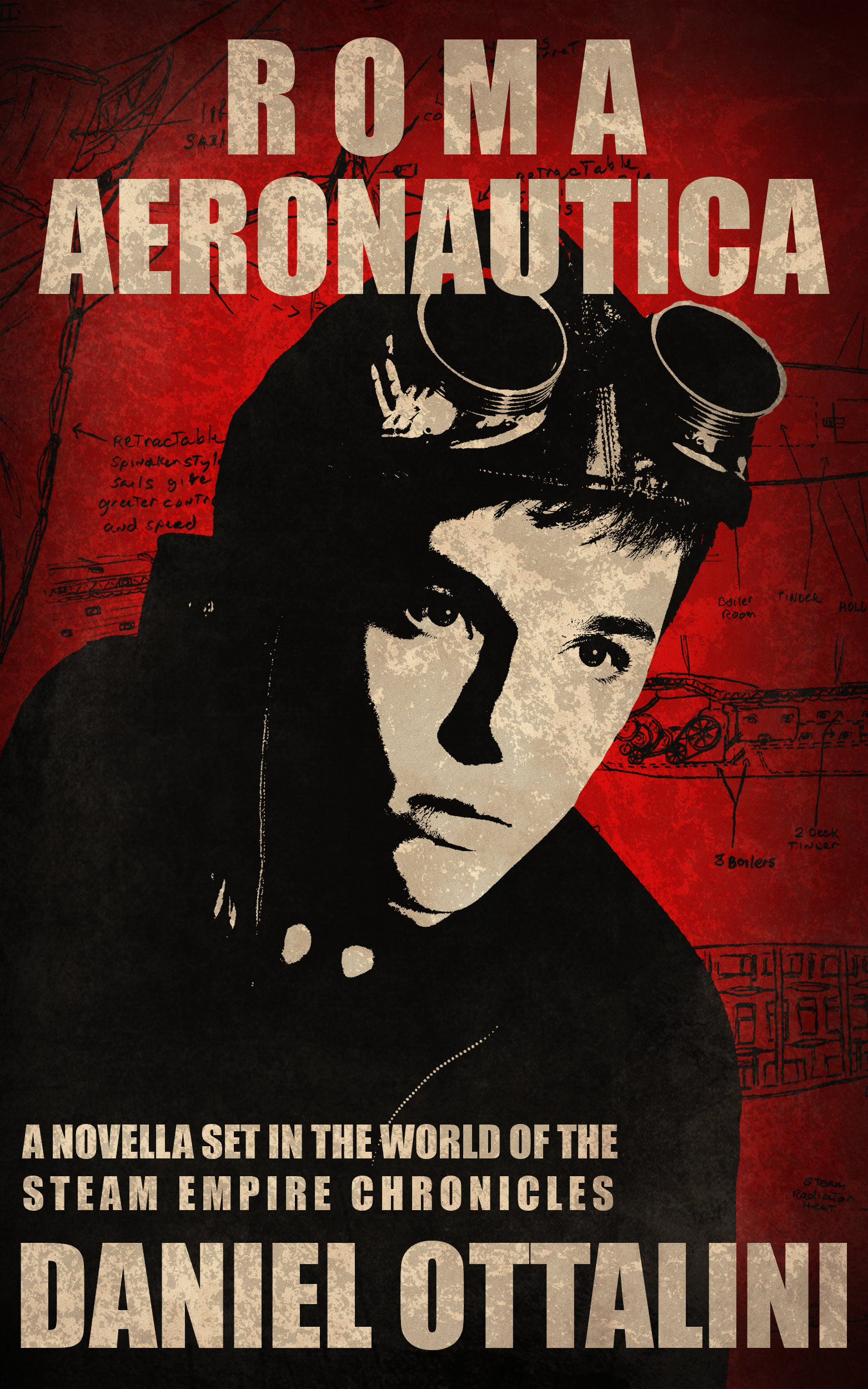
Are you getting your loved one an e-reader for the holidays? You’ll need some great books to go with it!Roma-Aeronautica-2500x1563

Right now I’m offering my newest book, Roma Aeronautica, at half off, for this weekend only! This deal is only available on Amazon Kindle and Nook eBook.

But as they say…But Wait, There’s More!

2013_EBook_WINNER-smGet my award-winning début novel, Brass Legionnaire, at 33% off! Yes, you can now get the novel that started it all for only $1.99. This weekend only, so you better move quickly! This sale is available at Amazon and Barnes & Nobel.

Click here for the Paperback Version!

Happy Mechanical Turkey Day!

Happy Thanksgiving! (Plus a Black Friday Announcement!)


IsaacSteampunk From Our Family to yours, Happy mechanical turkey day! (Or Thanksgiving, in your neck of the woods!)

Check back tomorrow for a Black Friday Sale! It is going to be huge!

Check out my Facebook or Twitter for more information! (And be sure to like/Follow me while you’re there!)

Ciao!

– Daniel, Julius, Constantine, Octavia, and the whole gang

Future Plans for My Novellas

Putting my novellas on Smashwords for all to read! – Learn more inside this blog post!


Hi everyone,


I recently got an email from an avid reader the other day, asking if I planned to release Roma Aeronautica into print. I’ll let you read the email below.


Hey my name is Kody (Last name withheld to protect privacy). I really enjoy you’re first 2 books Brass Legionnaire and Copper Centurion, but I don’t have a e-reader or anything like that. So I was wondering you were planning on releasing Roma Aeronautica on paperback? Along with the rest of the books you’re planning on writing.


I’m very glad Kody asked me about this. In my recent posting talking about novellas, you may have noticed a comment I made in response to another author, talking about what I was planning with my novellas.


1.) I will eventually publish my novellas, Roma Aeronautica and Antioch Burns, along with additional unpublished novellas, as an ebook and print book once I reach a number that I consider economical to create a print book for. In essence, I need at least four to five novellas, perhaps even six, to make a print book viable, at least to my standards (note, my standards include illustrations for every book, a different cover, plus possibly maps or additional commentary.)


2.) As it stands, for the entire Steam Empire Series & associated novellas, there will be at least five novellas, one for each novel, providing me with a ready base of material to create a printed book.


3.) As a stopgap for my readers who do not have e-readers, I am putting my novellas onto Smashwords, where you can download them as a PDF, which will work on any computer. I understand that this is not the best manner, but you can also download nook and kindle readers onto any computer as well in order to buy your ebooks that way.


So thanks, Kody, for emailing me to ask! I understand completely that not everyone has access to an ereader, and I will strive to make my novellas as accessible as possible for all my followers.

Until then, Roma Nike!


Guest Post: Alison Morton

Read this guest post by author Alison Morton on creating a realistic and plausible Alternate History world in your writing!


How to build a Roman future

First of all, thank you so much, Daniel, for swapping blogs today. It’s lovely to be hosted by another ‘Roman nut’. But my vision of an alternate Roman state is a little different…

Setting a story in the past or in another country is already a challenge. But if you invent the country and need to meld it with history that the reader already knows, then the task is doubled.

Unless writing post-apocalyptic, the geography and climate must resemble the ones in the region where the imagined country lies. And no alternate history writer can neglect their imagined country’s social, economic and political development. This sounds dry, but every living person is a product of their local conditions. Their experience of living in a place, and struggle to make sense of it, is expressed through culture and behaviour.
Norman Davies in Vanished Kingdoms: The History of Half-Forgotten Europe reminds us that:
…in order to survive, newborn states need to possess a set of viable internal organs, including a functioning executive, a defence force, a revenue system and a diplomatic force. If they possess none of these things, they lack the means to sustain an autonomous existence and they perish before they can breathe and flourish.

I would add history and willpower as essential factors.

So these are the givens. How do writers weave them into their stories? The key is plausibility. Take a character working in law enforcement. Readers can accept cops being gentle or tough, enthusiastic, intellectual or world-weary. Law enforcers come from all genders, classes, races and ages and stand in different places along the personal morality ruler. But whether corrupt or clean, they must act like a recognisable form of cop. They catch criminals, arrest and charge them and operate within a judicial system. Legal practicalities may differ significantly from those we know, but they must be consistent with that society while remaining plausible for the reader. But a flashing light and an oscillating siren on a police vehicle are universal symbols that instantly connect readers back to their own world.

Almost every story written hinges upon implausibility – a set-up or a problem the writer has purposefully created. Readers will engage with it and follow as long as the writer keeps their trust. One way to do this is to infuse, but not flood, the story with corroborative detail so that it verifies and reinforces the original setting the writer has introduced.  Even though my book is set in the 21st century, the Roma Novan characters say things like ‘I wouldn’t be in your sandals (not ‘shoes’) when he finds out.’  And there are honey-coated biscuits (Honey was important for the ancient Romans.) not chocolate digestives (iconic British cookie) or bagels in the squad room.

In my novel, INCEPTIO, the core story of a twenty-five year old New Yorker who faces total disruption to her life when a sinister government enforcer compels her to flee to her dead mother’s mysterious homeland in Europe could be set anywhere. But I’ve made New York an Autonomous City in the Eastern United States (EUS) that the Dutch only left in 1813 and the British in 1865. The New World French states of Louisiane and Québec are ruled by Gouverneurs-Généraux on behalf of Napoléon VI; California and Texas belong to the Spanish Empire; and the Western Territories are a protected area for the Indigenous Peoples. These are background details as the New World is only the setting for the first few chapters. But as J K Rowling knew with Harry Potter’s world, although you don’t put it in the books, you have to have worked it all out in your head.
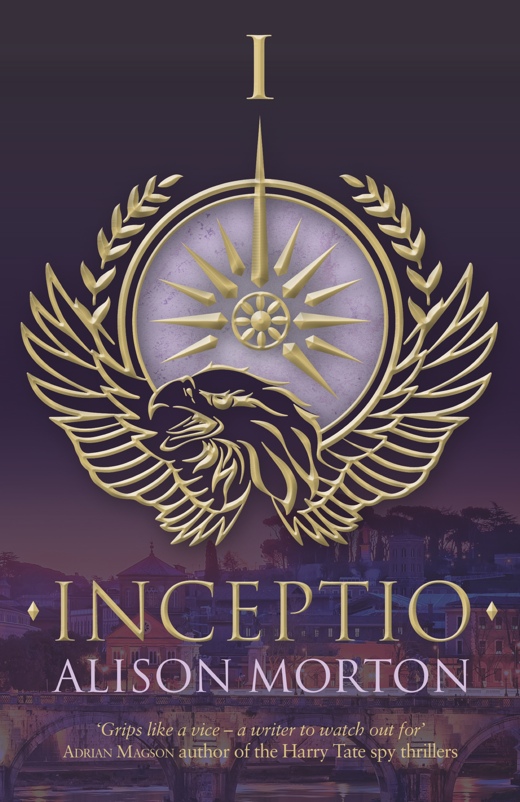
INCEPTIO_front cover_300dpi_sm

So, how to do this?

1. Decide on your Point of Divergence [POD] from real timeline history.

Research this to death; know the political set-up, religion, customs, dress, food, agriculture, geography, economy, legal background, defence forces, cultural attitudes, everyday life of all classes and groups. These are the building blocks for your alternate society.

Illustrating this with Roma Nova:
In AD 395 [fixing the POD], three months after the final blow of Theodosius’ last decree banning all pagan religions [political/legal set-up], over four hundred Romans loyal to the old gods [religious background], and so in danger of execution, trekked north out of Italy to a semi-mountainous area similar to modern Slovenia [geography]. Led by Senator Apulius at the head of twelve senatorial families [political/class background], they established a colony based initially on land owned by Apulius’ Celtic father-in-law [cultural – intermarriage with non-Romans]. By purchase [land-management], alliance [politics] and conquest [normal Roman behaviour!], this grew into Roma Nova.

2. Know how you want your society to be and develop it with historic logic.

If your story world doesn’t hang together, you will break a reader’s trust. You can have a fantastic world, such as Romans and steampunk 😉 but it needs to have reached that place in a plausible way. Writers need to provide motivation, whether personal or political or just forced by circumstances from outside. In my modern Roma Nova world, women are prominent.

This seems a long way from the ancient world where Roman attitudes to women were repressive [starting point]. But towards the later Imperial period [moving time on] women gained much more freedom to act, trade and own property and to run businesses of all types [social and economic development]. Divorce was easy, and step and adopted families were commonplace [standard Roman social custom].

Apulius, the leader of Roma Nova’s founders, had married Julia Bacausa, the tough daughter of a Celtic princeling in Noricum. She came from a society in which, although Romanised for several generations, women in her family made decisions, fought in battles and managed inheritance and property [non-Roman values introduced]. Their four daughters [next generation] were amongst the first pioneers [automatically new tough environment] so necessarily had to act more decisively [changing behaviour patterns] than they would have in a traditional urban Roman setting.

Given the unstable, dangerous times in Roma Nova’s first few hundred years [outside circumstances], eventually the daughters as well as sons had to put on armour and carry weapons to defend their homeland and their way of life [societal motivation]. So I don’t think that it’s too far a stretch for women to have developed leadership roles in all parts of Roma Novan life over the next sixteen centuries.

3. Keep some anchors to the readers’ pre-knowledge.

Creating a story should be fun for the writer and the result rewarding for the reader. Although most writers like to encourage the reader to work a little and participate in the experience, writers shouldn’t bewilder readers.  I mentioned plausibility earlier and how to inject corroborative details into the world being created. Anchors are equally important. For example, if you say “Roman legionary” most readers have an idea in their head already.

Taking Roma Nova as an example:
Roma Nova’s continued existence has been favoured by three factors: the discovery and exploitation of high-grade silver in their mountains [luck!], their efficient technology [historical fact], and their robust response to any threat [core Roman attitude]. Remembering their Byzantine cousins’ defeat in the Fall of Constantinople [known historical fact], Roma Novan troops assisted the western nations at the Battle of Vienna in 1683 to halt the Ottoman advance into Europe [known historical turning point]. Nearly two hundred years later, they used their diplomatic skills to help forge an alliance to push Napoleon IV back across the Rhine as he attempted to expand his grandfather’s empire [building on known historical person’s story].

4. Make the alternate present real.

Writers need to imbue their characters with a sense of living in the present, in the now. This is their current existence, for them it’s not some story in a book(!). Character-based stories are popular; readers are intrigued by what happens to individual people living in different environments as well as taking part in major historical events. Sometimes it’s more interesting to follow the person’s story than the big event itself…

5. Go visible.

Obviously, an imagined country is pretty hard to photograph. If you can draw, then you have the tools literally at your fingertips, but if like me your artistic skills are limited to turning out sketches of pin-men, then it’s back to the camera.

Images suggest tones, possibilities, and elements on which to base your ideas. Roma Nova is situated in the middle of Europe. I’m a European and have visited most countries, including a trip to Rome and Pompeii last year, so I have an idea of the countryside and cityscapes I’m looking for. The results are here; I refer back to them if I’m finding it difficult to visualise my characters in a particular location. Readers have loved them as well so it’s a double benefit.

In summary, alternate history gives us a rich environment in which to develop our storytelling.  As with any story in any genre, the writing must create a plausible world, backed by meticulous research, but the writer is, of course, the master of their universe.
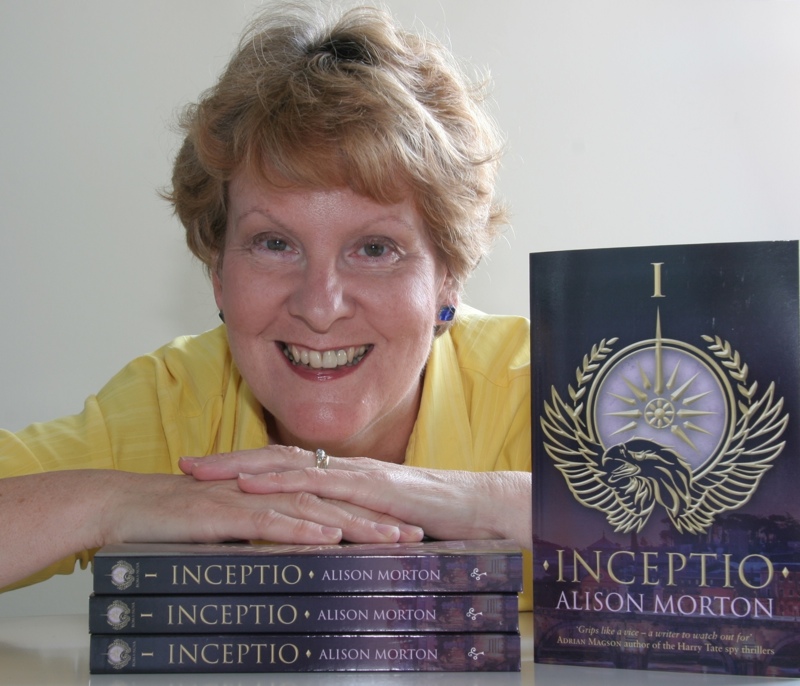
IMG_3906_sm(from Daniel) Alison Morton is the author of Inceptio, an alternate history novel showcasing the continued existence of a small fragment of Rome’s once great empire in the modern age through the eyes of undercover cop Karen Brown. I heartily recommend you check it out! Be sure to hop over and check out my blog posting on using steampunk in your alternate history world at her blog!



Following up on the Kickstarter…

A Brief Update on the Kickstarter rewards and an invitation to check out my Facebook Page!


Hi everyone!

Roma de noche. Via del Fori Imperiali.
Roma Central – Old School Style


So for today’s posting, I’m sharing what is happening here at Roma Central within the Kickstarter department. So far, we’ve got several things happening…


  1. The thank you post cards have been stamped (some still need special stamps to go to special places!)
  2. I think I have enough books on hand to deal with those people who wanted paper backs, but I need to do one final count.
  3. As for the posters, I have enough of them to send to people as well! I just have to make sure they can all fit into the same box!
  4. Work on Antioch Burns – featuring characters designed by your fellow readers – is progressing slowly but surely.


So as you can see, I haven’t left my kickstarter friends in the dark! Their rewards should definitely be done pretty soon, and thus will be sent out way ahead of the August due date.


By the way, did you know I have a facebook page? Please go there and ‘Like’ me to get more updates, cool pictures and illustrations, and more! Also, I plan on running a mini-competition to get some more ‘likes’ very soon – with a cool, as yet unreleased, prize!

Oh, and there may be a new kickstarter in the far future for Iron Tribune. Copper Centurion is doing much better than I’ve expected, getting pretty low in the rankings chart (i.e. 7th place, 12th place, etc) But Brass Legionnaire has been 2nd place in the Greek and Roman books page for the last few weeks! Yippee!


Check out the novels already!


Where the Steam Empire Chronicles is going next…

Where the Steam Empire Chronicles is going from here! Plus a sneak peek at Roma Aeronautica.


Hi all, Happy Sunday!

I figured I’d briefly share my overall plan for where I’m taking the series next. You see, as a writer, I’m a tad bit obsessive when it comes to planning (but not as a teacher, I’m horrible at planning there!). So what are my plans and goals for the S.E.C. after the release of Copper Centurion

Tactical Layout of the H.M.A.S. Scioparto

First, I’m going to have two short stories put out this year. Roma Aeronautica, will be released August 1st most likely, and Antioch Burns, the second one, will be out in December most likely (still a flexible time period). Why two novellas you ask? Honestly, I was tired and I wanted to feel the success of finishing things without having to pound away at another novel for a bit. Don’t worry fans, you’ll still get your Iron Tribune. I’m not giving up! Spring is just an incredibly hectic time for teachers, and it can really show in my writing and sanity. So I’ve discovered that writing during this time is the hardest for me. Strangely enough, writing during the summer is not that difficult for me!

My personal goal with writing and self-publishing is to eventually be able to do this exclusively. Obviously I’d need to see where I am personally and professionally, as a full time job is really nice income wise, and I’d have to be able to make up what I’m losing by giving up the full time job, but it’s nice to have a goal. Secondary to that, I’d like to at least be able to not work summers, which I get off as a teacher, because of the income from the novels. I feel as though that would be a great start and allow me more time with my friends and family.

Oh, and I’d love to visit the places I talk about in my novels. Perhaps I can even figure out how to set up a tour or something similar so I can go with fans! (Just a thought! – would anyone actually be interested?)

As an extra fun bit, enjoy this tidbit from Roma Aeronautica below!

“I know that my ancestry can be a mark against my family’s honor. But I implore you to give me a chance to prove myself. I will pass whatever tests you require, just for that chance.” He bowed low, then thanked them.
“All right, all right, let’s vote already,” Astoragas said impatiently. “I vote no. Can’t have little Cassi brats infiltrating the airfleet. First one, then more!”
“No,” Garus Miletosinos said, hardly looking up from his paperwork.
“Yes,” Quintus Heratus said forcefully, smiling warmly at the boy.
The room was silent for a moment as the small group of bureaucrats waited for the last two votes. By tradition, the chief judge voiced his opinion last, so it could be said he was not influencing any of the others.
“Vorentius?” Amelius turned to his right and prodded the sleeping judge with his foot.
“Who? What? Vote? Yes… of… of course!” Vorentius Ilsotus said with a flourish before closing his eyes and beginning to snore again. Sighing, Amelius realized it was once again up to him to be the deciding vote.

Ciao!

Four Days and Four Key Moments…

Four Key moments in The Steam Empire Chronicles background history…
Oh, and did I mention it’s just four days until Copper Centurion’s ebook is released?!


Four days until Copper Centurion is released into the wilds of the ebook world! May better be prepared! By the way, I’ll be reblogging a post from Alternate History Weekly Update here soon as I have an article about how to include steampunk accurately and correctly into your alternate history novel.

Within the world of Brass Legionnaire and Copper Centurion, there are many critically important events that have led to the events in these stories. Here is but four of them for your temptation (and enjoyment!)

  1. The failed assassination attempt on Julius Caesar – Filled with a sense of duty to his friend, rather than to the Republic, Brutus identifies the conspirators, who are jailed and later executed by Julius Caesar for crimes against the Empire. The conspirators’ families are blacklisted and prevented from ever applying or holding military or civilian power in the empire again.
  2. The battle of Teutoburg forest – Legatus Commanding Officer Gaius Sentius Saturninus maintains command of the Germania invasion force after General Varus falls from his horse in a freak accident, shattering his thighbone and preventing him from leading the invasion. The legatus, familiar with German tricks, ambushes and destroys the combined forces of the germania tribes in a four day running battle, using mechaniphants and skimmers to identify and crush pockets of resistance. General Arminius is killed when a mechaniphant tramples his command element.
  3. Subjugation of Hibernia – after the successful elimination of the northern hill tribes in Britannia, Rome looks westward towards the last free territory in western Europe. After a quick invasion, which quickly routes the locale levies of the tribal lords, Rome forcibly moves thousands of displaced central and southern Europeans to the new, relatively empty territory. Several bloody uprisings erupt, forcing Rome to deploy multiple legions to quell the territory.
  4. Emperor Diocletian’s acceptance of Christianity as a separate, but not state-funded, religion. Rather than submitting to Christianity, Diocletian chose to sidetrack them, allow the worship of their solitary god but placing an additional (and heavy) tax burden upon them. The creation of a standard pantheonic ‘bible’ in response to the christian bible, allowed the followers of the old gods to combat the rapid expansion of this new religion. But with religious rights protected (and taxed), the Empire has managed to avoid any out-and-out religious wars… so far.

Read my Article now on Alternate History Weekly Update!

Check out my article on Alternate History Weekly Update!


Check out this link! I’m front page on AH Weekly Update, which is a great honor. Matt over there is a stellar person (and I wish I was a better communicator!) Enjoy!

http://alternatehistoryweeklyupdate.blogspot.com/2013/04/adding-some-steam-to-your-history.html

How to run a Successful Kickstarter Campaign Part 1

An introduction on How to Successfully run a Kickstarter campaign.


Kickstarter
Kickstarter (Photo credit: Scott Beale)


Hi everyone,


I figured I should type this up since I may be asked to give a talk on it at next year’s EPICon Conference in San Antonio, Texas. Hopefully this post will help those of you interested in creating a successful crowd-sourced funding drive. One of the most common places to do this is on Kickstarter (Sample Link provided), but other commonly used sites are Indiegogo, or GoFundMe. There are many others, but Kickstarter is currently one of the largest.

 
So what do you need to know before starting out on Kickstarter? First, know the rules. You are not getting free money, and you are not guaranteed success. Just like you have to market your novel, product, business, etc, you also have to market your Kickstarter. Kickstarter is great for novels because you have something tangible to offer people when completed. Kickstarter funds can be used to help cut the cost of certain parts of the publishing process for self-published authors, or to provide additional monies for marketing, development, etc for both self-pub and small pub authors.


Before you start a Kickstarter Campaign, it is critical to do your research.


Look at other, successfully funded books on Kickstarter. What do they do? I can point out a few signs that generally signal a kickstarter will be successful.


  1. They have a video OR incredibly gorgeous artwork at the top of the page.
  2. They have a wide variety of rewards, including those starting at just $5.
  3. They consistently provide updates and check/reply to comments posted by people.
  4. They promote their kickstarter to friends, family, twitter/facebook followers, on goodreads, etc.
  5. They don’t ask for too much in the beginning.


“But Daniel, my book cost me about 2k to edit! Shouldn’t I ask for all of that?”


Sure, if you want to fail right away and get nothing. (This may not be true as you will soon see). For self-pub authors, smaller amounts are better, especially if you are a debut author. For my first novel, I was truly blessed because my aunt helped out. A lot. But by the time I ran my second one, I had both followers, supporters, and fans who I could turn to. This is the caveat I wrote about earlier. IF you have a wide backing of support, including people clamoring for your next novel (Not one person, but many), then you can get away with asking for slightly more. I would say the best range to stay in is the 1k-2k range.


Creating a great title is important too. That’s what people will see first and what will grab them. Brass Legionnaire doesn’t tell people anything about what I’m doing. Copper Centurion – the 2nd Roman Steampunk Adventure does tell people what I’m doing.


Finally, justify your costs. What will the money provide? I described how I originally wanted to fund the novel with just my own money, but wanted kickstarter funds to make it better. I shared how I wanted more maps, more artwork, and additional promotional materials. And people understood.


I’ll end there for today. Hope to bring more to you very soon this week!


By the way, just to let you all know, I’ve finished Roma Aeronautica. Now I suppose it is time to start typing Iron Tribune!