How to Beat Writer’s Block

Brief Posting on Defeating Writer’s Block


Hi all,

Had a terrible case of writer’s block the last few days (Okay, weeks. I think Lisa, the publisher of Antioch Burns, was having conniption fits.) But seriously, nothing was working. I was really unfocused and could not connect one idea to another. So how did I break it? Well, I think it’s a combination of factors, but here’s what I’ve got so far.images

    1. Got a lot of sleep (seriously, a tired brain doesn’t always think straight)
    2. Stayed up late (in opposition to the prior one, I stayed up late once I finally broke through!)
    3. Listened to classical music from Kingdom Of Heaven.
    4. Alternatively, you could have also watched scenes from that, or any other movie/film connected to your genre.
    5. Went for a walk. Without the iPod.
    6. Drove home without listening to the radio. (Both E and F make you think, because you have nothing to distract you.)
    7. Text/Phone a friend (Who recommend I go for a walk. Thanks Lys!)

Breaking through netted me a sweet 1k words in Antioch Burns, plus a long range pat on the back from my publisher. 🙂 Anywho, short posting today. What else do you do to defeat writer’s block?

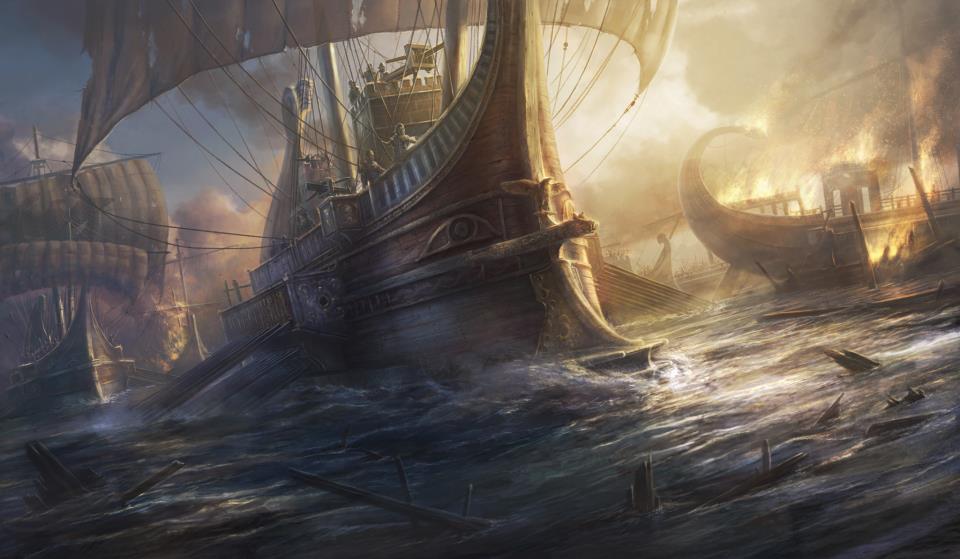
ships
Alternatively, look up inspirational photos online! (This is from the upcoming Rome Total War II game.)


Five Ways to Become a Better Self-Published Author

Five Ways to become a better Self-Published Author


Hi all,
Before I published Brass Legionnaire, I stumbled across many a website stating that you had to do this or you had to do that as a writer, author, self-publisher, etc etc etc. I think the best one I’ve found has to be here, as the sheer hilarity and slightly mocking tone both annoy you and make you realize that yes, you do need to do those things.

But that post is merely about being a better writer. I think it takes a special type of person to be a self-published writer/author. So I threw together a list on how to become a better self-published author – as always, take with a grain of salt. I’m not the best, but I certainly have some hard won experience on it by now.

Continue reading “Five Ways to Become a Better Self-Published Author”

Sneak Peek at Antioch Burns…

Enjoy a short preview of the upcoming novella, Antioch Burns.


Hi all!

In the 4th of July Holiday spirit, I figured I’d share a bit more of the most recent update to Antioch Burns. In this scene, the Mongols attempt to eliminate the remnants of a Roman patrol on the outskirts of Antioch before they can warn the city….

Continue reading “Sneak Peek at Antioch Burns…”

Happy 4th of July from your favorite RomanPunk Author!

Happy 4th of July!


Fireworks-in-RomeHi Everyone! Happy 4th of July to everyone here in the United States (and incidentally, happy belated Canada day to those friends north of the border!) I hope your day is happy, safe, and relaxing. Remember to eat lots of hot dogs or hamburgers, talk with a lot of friends, and bring a blanket to enjoy the fireworks!

I know I’ve been AWOL a while, but never fear, more posts coming soon!

– Daniel

Other Notable Cultures in the Steam Empire Chronicles

Curious about the other cultures in the Steam Empire Chronicles? Read on to learn more about the Nortlanders in the first part of this mini-series!


[a man walks up to a podium and taps on the microphone. There is a slight squeal, then the audio levels out]

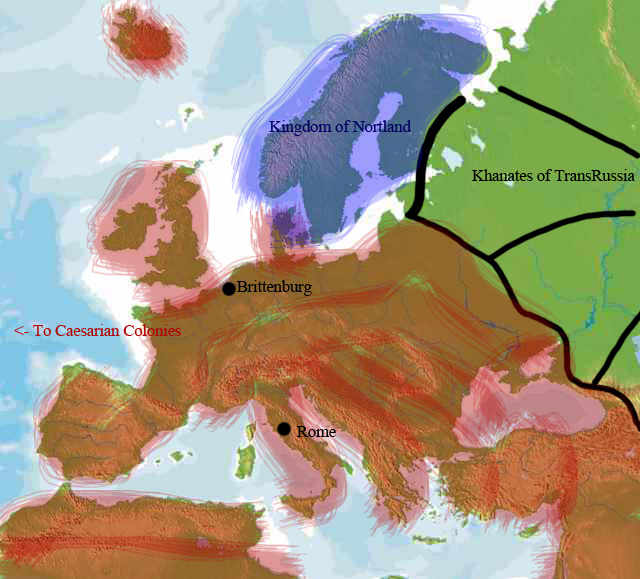
Greetings all, and welcome to my brief lecture on the other cultures and notable political entities in our world today. Before I begin, please take note of this map – as you can see, it has been heavily modified and shaded in by yours truly, but it should give a good indication of some of our… less friendly… neighbors.Rough Draft of Map

So as you can see, our exceptional empire is bordered by Nortland, the barbarian collective of raiders, miners, and other uncivilized tribes. It was believed that their forces were behind the invasion of Brittenburg and the assassination of the Primus Imperio in Rome.

As you can see, my map does not reflect the recent Roman invasion of Nortland, where our gallant forces crushed their Nortlander opponents. It is good that we have forced these barbarian savages into peace, for our other enemies have decided to take advantage of our northern focus to attack us from the east.

Yes, you heard me, the Mongols have unified once more and are pushing east from their bases in Bactria and Persia. The scattered rebellions of their Persian subjects that so aided us in our last war with them have been crushed. Whilst I have little love for our former neighbors, their sacrifice helped ensure our ability to hold the eastern half of the empire.

But before I broach that topic, let us turn back to the Nortlanders.
Savage and cruel, with a streak of cunning hiding beneath their gruff exteriors, the Nortlanders have secretly emulated us Romans for centuries. Consider their own mechanical creation, the Mechwolf. Quite obviously, they stole the idea from our own mechaniphant. But what good is a copy when faced with the real thing? I have heard that an unnamed chronicler was able to illustrate part of a battle between our own warmachines and those of the northerners, but you shall have to check out Copper Centurion in order to access those drawings.

In battle, the Nortlanders pride themselves on their hit and run tactics, preferring to strike and flee rather than face our brave soldiers in a stand up fight. Only when pushed back into a corner will they turn and strike, like a wounded bear. They are great lovers of the raid, and have, in times past, raided as far south as the lands of the Gauls and Britannia.

Their government is a hybrid of monarchy and tribalism, with Wardens serving as sub-kings over smaller tribes in the four cardinal directions, bowing to the overall king reigning in Midgard, or House of the Winter Gods, as the Nortlanders say. Of the Warden positions, those of the East and South are the most important and powerful, with the East Warden facing off against the Mongolian Khanates of Rus and the South Warden dealing with the Romans.

Technological wise, they are capable of adaptation and modifying stolen technology. Nortland culture does not have a ready place for scientists or engineers, and have imported or captured Roman or even Mongolian specialists for specific work. They have built and designed capable warships able to match our standard and imperial sized warships. However, they are very limited in their ability to maintain or service their fleet with the limited number of support staff. Thus, their ships are prone to breaking down, particularly in the harsh northern weather. Weapons wise, the Nortlanders favor stone over bolt throwers, and have minimal amounts of gunpowder weaponry. One piece of technology that they do have is the chain-axe, a mechanical saw attached to the standard war-axe form. When activated, the teeth of the chain axe allow it to tear through shields, armor, and flesh with relative ease. Chain Axes are even capable of damaging both our own Ostrichines and Mechaniphants. Rest assured that our own Roman engineers are looking at ways to modify the technology for our own use as we speak.

Tune in soon for our next chat on the Khanates of Rus and the East. Be sure to subscribe to the blog above, and follow me on facebook and twitter, so you can keep up to date on the latest news about the Steam Empire Chronicles!

Guest Post: Alison Morton

Read this guest post by author Alison Morton on creating a realistic and plausible Alternate History world in your writing!


How to build a Roman future

First of all, thank you so much, Daniel, for swapping blogs today. It’s lovely to be hosted by another ‘Roman nut’. But my vision of an alternate Roman state is a little different…

Setting a story in the past or in another country is already a challenge. But if you invent the country and need to meld it with history that the reader already knows, then the task is doubled.

Unless writing post-apocalyptic, the geography and climate must resemble the ones in the region where the imagined country lies. And no alternate history writer can neglect their imagined country’s social, economic and political development. This sounds dry, but every living person is a product of their local conditions. Their experience of living in a place, and struggle to make sense of it, is expressed through culture and behaviour.
Norman Davies in Vanished Kingdoms: The History of Half-Forgotten Europe reminds us that:
…in order to survive, newborn states need to possess a set of viable internal organs, including a functioning executive, a defence force, a revenue system and a diplomatic force. If they possess none of these things, they lack the means to sustain an autonomous existence and they perish before they can breathe and flourish.

I would add history and willpower as essential factors.

So these are the givens. How do writers weave them into their stories? The key is plausibility. Take a character working in law enforcement. Readers can accept cops being gentle or tough, enthusiastic, intellectual or world-weary. Law enforcers come from all genders, classes, races and ages and stand in different places along the personal morality ruler. But whether corrupt or clean, they must act like a recognisable form of cop. They catch criminals, arrest and charge them and operate within a judicial system. Legal practicalities may differ significantly from those we know, but they must be consistent with that society while remaining plausible for the reader. But a flashing light and an oscillating siren on a police vehicle are universal symbols that instantly connect readers back to their own world.

Almost every story written hinges upon implausibility – a set-up or a problem the writer has purposefully created. Readers will engage with it and follow as long as the writer keeps their trust. One way to do this is to infuse, but not flood, the story with corroborative detail so that it verifies and reinforces the original setting the writer has introduced.  Even though my book is set in the 21st century, the Roma Novan characters say things like ‘I wouldn’t be in your sandals (not ‘shoes’) when he finds out.’  And there are honey-coated biscuits (Honey was important for the ancient Romans.) not chocolate digestives (iconic British cookie) or bagels in the squad room.

In my novel, INCEPTIO, the core story of a twenty-five year old New Yorker who faces total disruption to her life when a sinister government enforcer compels her to flee to her dead mother’s mysterious homeland in Europe could be set anywhere. But I’ve made New York an Autonomous City in the Eastern United States (EUS) that the Dutch only left in 1813 and the British in 1865. The New World French states of Louisiane and Québec are ruled by Gouverneurs-Généraux on behalf of Napoléon VI; California and Texas belong to the Spanish Empire; and the Western Territories are a protected area for the Indigenous Peoples. These are background details as the New World is only the setting for the first few chapters. But as J K Rowling knew with Harry Potter’s world, although you don’t put it in the books, you have to have worked it all out in your head.
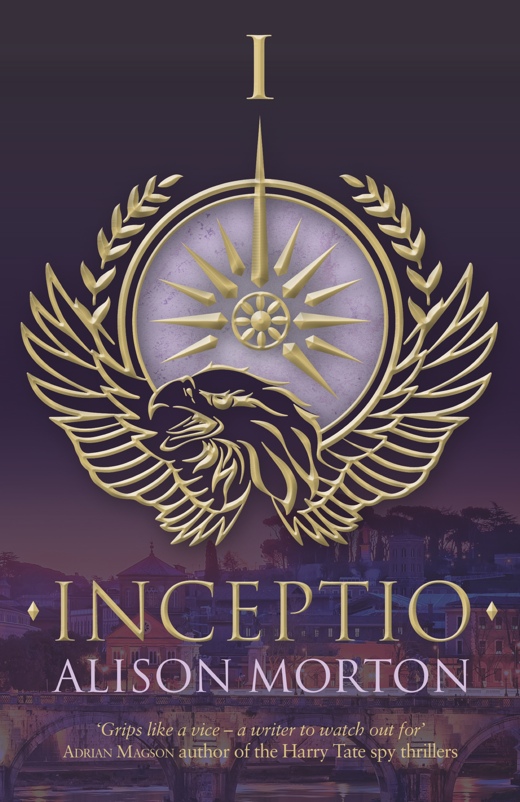
INCEPTIO_front cover_300dpi_sm

So, how to do this?

1. Decide on your Point of Divergence [POD] from real timeline history.

Research this to death; know the political set-up, religion, customs, dress, food, agriculture, geography, economy, legal background, defence forces, cultural attitudes, everyday life of all classes and groups. These are the building blocks for your alternate society.

Illustrating this with Roma Nova:
In AD 395 [fixing the POD], three months after the final blow of Theodosius’ last decree banning all pagan religions [political/legal set-up], over four hundred Romans loyal to the old gods [religious background], and so in danger of execution, trekked north out of Italy to a semi-mountainous area similar to modern Slovenia [geography]. Led by Senator Apulius at the head of twelve senatorial families [political/class background], they established a colony based initially on land owned by Apulius’ Celtic father-in-law [cultural – intermarriage with non-Romans]. By purchase [land-management], alliance [politics] and conquest [normal Roman behaviour!], this grew into Roma Nova.

2. Know how you want your society to be and develop it with historic logic.

If your story world doesn’t hang together, you will break a reader’s trust. You can have a fantastic world, such as Romans and steampunk 😉 but it needs to have reached that place in a plausible way. Writers need to provide motivation, whether personal or political or just forced by circumstances from outside. In my modern Roma Nova world, women are prominent.

This seems a long way from the ancient world where Roman attitudes to women were repressive [starting point]. But towards the later Imperial period [moving time on] women gained much more freedom to act, trade and own property and to run businesses of all types [social and economic development]. Divorce was easy, and step and adopted families were commonplace [standard Roman social custom].

Apulius, the leader of Roma Nova’s founders, had married Julia Bacausa, the tough daughter of a Celtic princeling in Noricum. She came from a society in which, although Romanised for several generations, women in her family made decisions, fought in battles and managed inheritance and property [non-Roman values introduced]. Their four daughters [next generation] were amongst the first pioneers [automatically new tough environment] so necessarily had to act more decisively [changing behaviour patterns] than they would have in a traditional urban Roman setting.

Given the unstable, dangerous times in Roma Nova’s first few hundred years [outside circumstances], eventually the daughters as well as sons had to put on armour and carry weapons to defend their homeland and their way of life [societal motivation]. So I don’t think that it’s too far a stretch for women to have developed leadership roles in all parts of Roma Novan life over the next sixteen centuries.

3. Keep some anchors to the readers’ pre-knowledge.

Creating a story should be fun for the writer and the result rewarding for the reader. Although most writers like to encourage the reader to work a little and participate in the experience, writers shouldn’t bewilder readers.  I mentioned plausibility earlier and how to inject corroborative details into the world being created. Anchors are equally important. For example, if you say “Roman legionary” most readers have an idea in their head already.

Taking Roma Nova as an example:
Roma Nova’s continued existence has been favoured by three factors: the discovery and exploitation of high-grade silver in their mountains [luck!], their efficient technology [historical fact], and their robust response to any threat [core Roman attitude]. Remembering their Byzantine cousins’ defeat in the Fall of Constantinople [known historical fact], Roma Novan troops assisted the western nations at the Battle of Vienna in 1683 to halt the Ottoman advance into Europe [known historical turning point]. Nearly two hundred years later, they used their diplomatic skills to help forge an alliance to push Napoleon IV back across the Rhine as he attempted to expand his grandfather’s empire [building on known historical person’s story].

4. Make the alternate present real.

Writers need to imbue their characters with a sense of living in the present, in the now. This is their current existence, for them it’s not some story in a book(!). Character-based stories are popular; readers are intrigued by what happens to individual people living in different environments as well as taking part in major historical events. Sometimes it’s more interesting to follow the person’s story than the big event itself…

5. Go visible.

Obviously, an imagined country is pretty hard to photograph. If you can draw, then you have the tools literally at your fingertips, but if like me your artistic skills are limited to turning out sketches of pin-men, then it’s back to the camera.

Images suggest tones, possibilities, and elements on which to base your ideas. Roma Nova is situated in the middle of Europe. I’m a European and have visited most countries, including a trip to Rome and Pompeii last year, so I have an idea of the countryside and cityscapes I’m looking for. The results are here; I refer back to them if I’m finding it difficult to visualise my characters in a particular location. Readers have loved them as well so it’s a double benefit.

In summary, alternate history gives us a rich environment in which to develop our storytelling.  As with any story in any genre, the writing must create a plausible world, backed by meticulous research, but the writer is, of course, the master of their universe.
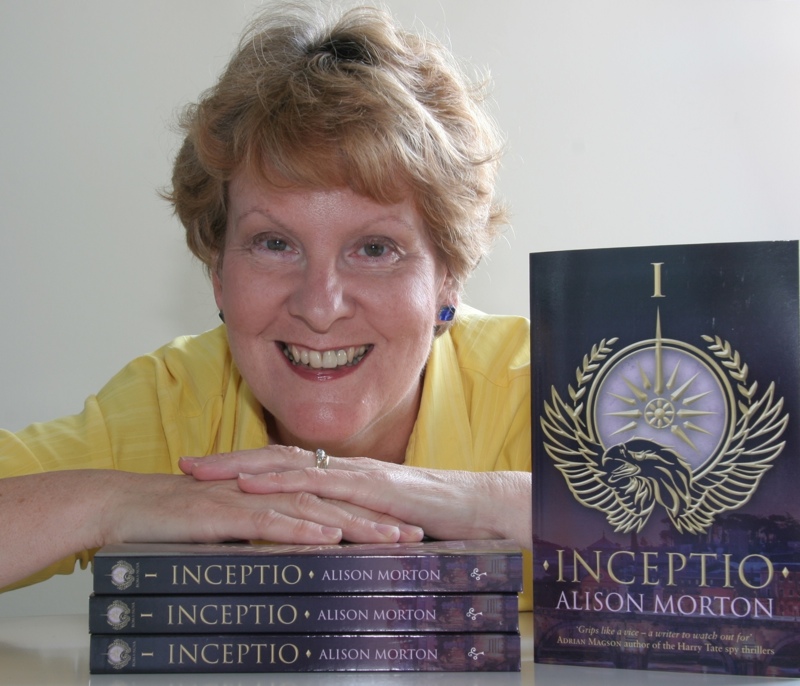
IMG_3906_sm(from Daniel) Alison Morton is the author of Inceptio, an alternate history novel showcasing the continued existence of a small fragment of Rome’s once great empire in the modern age through the eyes of undercover cop Karen Brown. I heartily recommend you check it out! Be sure to hop over and check out my blog posting on using steampunk in your alternate history world at her blog!


Following up on the Kickstarter…

A Brief Update on the Kickstarter rewards and an invitation to check out my Facebook Page!


Hi everyone!

Roma de noche. Via del Fori Imperiali.
Roma Central – Old School Style


So for today’s posting, I’m sharing what is happening here at Roma Central within the Kickstarter department. So far, we’ve got several things happening…


  1. The thank you post cards have been stamped (some still need special stamps to go to special places!)
  2. I think I have enough books on hand to deal with those people who wanted paper backs, but I need to do one final count.
  3. As for the posters, I have enough of them to send to people as well! I just have to make sure they can all fit into the same box!
  4. Work on Antioch Burns – featuring characters designed by your fellow readers – is progressing slowly but surely.


So as you can see, I haven’t left my kickstarter friends in the dark! Their rewards should definitely be done pretty soon, and thus will be sent out way ahead of the August due date.


By the way, did you know I have a facebook page? Please go there and ‘Like’ me to get more updates, cool pictures and illustrations, and more! Also, I plan on running a mini-competition to get some more ‘likes’ very soon – with a cool, as yet unreleased, prize!

Oh, and there may be a new kickstarter in the far future for Iron Tribune. Copper Centurion is doing much better than I’ve expected, getting pretty low in the rankings chart (i.e. 7th place, 12th place, etc) But Brass Legionnaire has been 2nd place in the Greek and Roman books page for the last few weeks! Yippee!


Check out the novels already!


Visualizing your World (Strategies for Story Design)

Visualizing your World using Sketches and Drawings to help create your Self-Published Story!


Hi everyone,

It’s almost the beginning of summer break, and I am totally ready to go! Buckling down and working on the novel & novellas this summer is going to be one tricky component. Now that I have two books out, I feel even more inspiration to keep writing.

One thing I wasn’t expecting was other people to think me an expert on writing! I got an email (to my school account, no less!) from one of my former students. This child is 10 years old, and already writing his own book about the Vikings. He sent me a good twenty pages or so of typed story. Now, as you might expect, it was full of your standard typos and inconsistencies. So what did I tell him to do?

I told him to sketch out his story.

I’m not an amazing illustrator, but I am a very visual person. I can write something much better if I doodle or sketch it out beforehand. Think about all the benefits that creating a visual plan or representation of your story can bring!

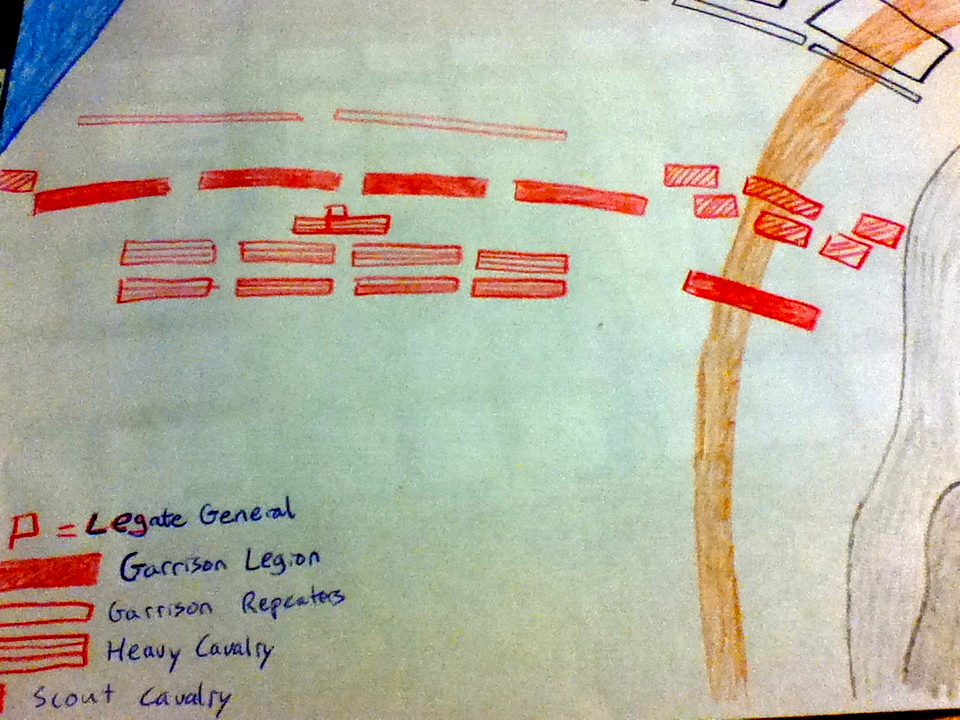
IMG_0033IMG_0032First, it can bring perspective. Writing is all about being able to accurately describe what is happening to your readers. Many of our favorite writers are able to write about and build their worlds with beautiful prose and writing. However, it helps to have a blueprint, so-to-speak.

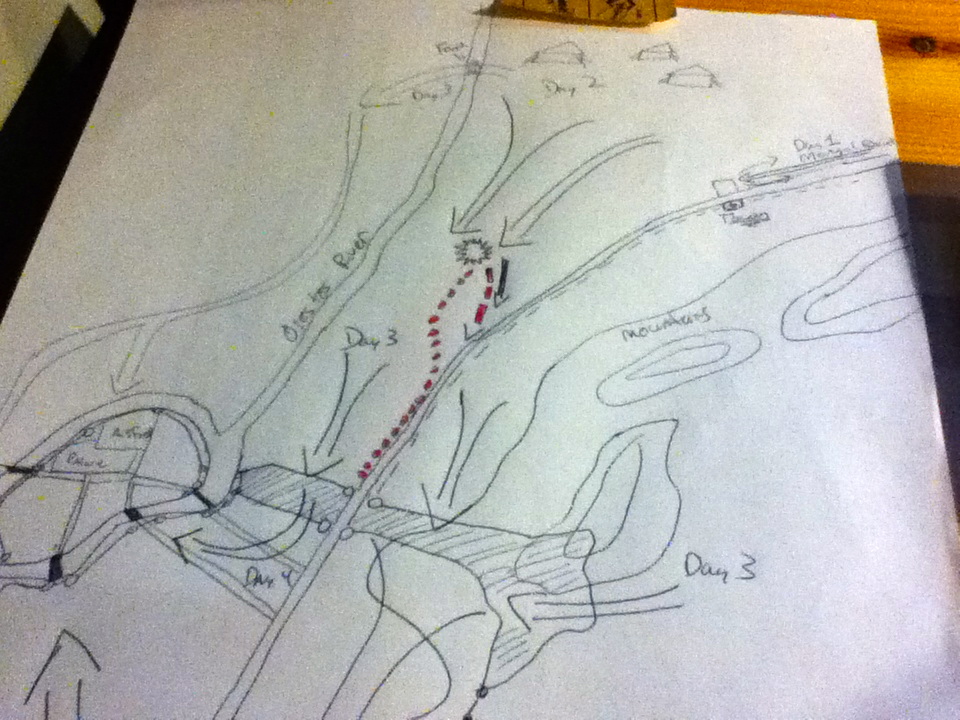
Second, you can create additional parts of the story – for example, as you’ll notice from these sketch I’ve created for Antioch Burns, that there is a battle in the story. In the past, I’ve written primarily from the point of someone in the thick of battle. But drawing this picture helped me to rearrange my plan and adjust what I was going to do.

IMG_0034Finally, doodling or sketching can help you sequence and organize events in the story. I know some writer buddies of mine who draw an illustration for every chapter. It’s easy to rearrange if you discover the story has a week point or doesn’t make sense in the current order.

Hope that helps you all! I know doodling helps me (It’s also good to pass time when you are bored in staff meetings!) P.S. Don’t forget to check out Brass Legionnaire and Copper Centurion. Just got some great new reviews! (5 and 4 star!) There’s even one from France (on amazon.co.uk)

Enjoy! Ciao!

Antioch Burns…

A sneak peek at Antioch Burns, my second novella coming out late 2013.


Happy Memorial Day Weekend!


I hope you are all having a wonderful weekend. Its a tad bit too cold to go to the pool or even sunbathe where I am currently, but hopefully that will change by next weekend.ancientCityMap


Unfortunately, for the people of Antioch in my next novel, this is not a good time to be in town. You see, the Mongolians have invaded….


Enjoy the tantalizing sneak peek at Antioch Burns, my 2nd novella that is still in the pipeline. I hope you like the tidbit.


Don’t forget that you can get both Brass Legionnaire AND Copper Centurion now! Both are available on Nook, Kindle, and all other devices


The ramparts of Antioch at the Mount Silpius d...
The ramparts of Antioch at the Mount Silpius during the 12th century. (Photo credit: Wikipedia)


. Copper Centurion should be out on iTunes this weekend as well. If you like the novels, please rate and review them so that others can join the world of Romanpunk.


*and remember to wear sunscreen!*


Ciao!


The countryside flew by at a prodigious rate, the horses of the auxilia scouting unit eating up the leagues of rolling hills and farmland. The double score of men rode two abreast, sunlight shinning off their glittering scale armor. The detachment of horsemen sent up a thin cloud of dust from the dirt road as they crested a low rise, their leader reining in his steed. Decanus Orestus Flavian reached into his saddlebag and pulled out a map. He traced their route with his gloved finger.


“According to the merchant’s report, he saw the burning homes down this way. He also said there was a lot of easterner cavalry. Pah!” He laughed. “Probably one of those damnable tribal disputes lighting up again. Stupid civilian probably hasn’t ever seen a real eastern horseman in his life.” He quipped to his auxilia. Several of his men laughed. They had been together for some time. Flavian liked to say that he had been born in the saddle. Out here on the eastern border of the Imperial Roman Empire, the massed cavalry forces of the eastern Mongolian Khannates were the main threat, and the Romans had been forced to develop their forces in kind. Flavian was one of the original founders, boys picked from the riding stables of various major cities, given weapons and armor and sent to fight on horses not designed for the job. The fact that he survived the two years of brutal, no-holds-barred warfare spoke to his skill and tenacity. That he rose in rank to lead an auxilia detachment, the ground based eyes and ears of the Roman Army, spoke to his intelligence.


Using this intelligence now, Flavian guided his men off the dirt roadway, to better mask their dust cloud as they approached the supposed scene of the attack. They rode through the field, trampling the high crops with impunity. Finally, the horsemen crested a short rise, and the officer reined his men in.


“In the name of Jupiter…” Flavian’s jaw dropped, gaping at the sight laid out before him.


Using Reader Input in your Story Writing Process

I talk about what I’ve learned about including reader character creations into my novels, and an update on new characters in Antioch Burns!


Hi all,As many of you may know, I recently completed a Kickstarter program that helped me to fund a large portion of Copper Centurion’s cost. This go around, I offered a reward level that allowed the backer the option to create a character in my upcoming novel, Steam Empire Chronicles #3 – Iron Tribune.

However, I thought it would be easier – and better – to have the characters (or several of them) introduced through a novella – in this case, Antioch Burns. I’d like to share with you what I’ve discovered from my experiences.

  1. Communicate Early, and make your expectations clear – Of the four people who contributed that level of money, one gave me plenty of information, two gave me some, and one gave me very little information to go on. So I sent an email, then one, then two. Both times I set ‘deadlines’ for people to return information by for inclusion in the story.

Then I waited.. and waited..

You get the point. So I started out writing the novella, and to my surprise recently got a very large ‘info dump’ of information that will be extremely helpful in writing this particular character. But I did have to go back and rearrange some parts of the story – which was fine, I was just three pages in.

2. Accept the fact that people may not commit – Yes, even if people say they want to help, they may not. Oh well, nothing I can do.

3. Remember that every character you get is a blessing! Look at it this way, I don’t have to come up with a very detailed background for this character, nor a name (easier in some genres, harder with Roman background) – Also, I don’t have to come up with characteristics or habits, as someone has already done that for me. Indeed, I was able to start spinning the story in a direction I think I like.

4. In the end, it’s all about how well you spin the story – Just remember. In the end, you’re the boss!

By the way, if you haven’t already, be sure to check out my novels Brass Legionnaire and Copper Centurion. I’m exceptionally proud of both of these novels, and they’ve reached #2 and #6 on the Steampunk Amazon Chart in the last week or so. In addition, Both novels have been consistently ranked top ten in multiple ebook categories (Greek and Roman, Myths, and Alternate history being a few).

Ciao!