Antioch Burns Cover Sneak Peek!

A preview of Antioch Burns’ cover and some exciting November news!


Antioch Burns Sneak Peak

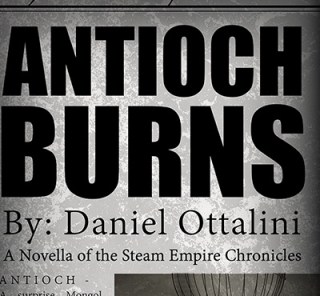
What is this? A sneak peek at the cover of Antioch Burns? Yes indeed! As you can see, I’ve gone with the newspaper-y style of cover. I’ll be revealing the full cover later this month, along with a special sale announcement! November and December bring great gifts and surprises to my Roman Steampunk & Alternate History World. See you soon!

Copper Centurion Up for an EPIC eBook Award!

Copper Centurion is up for an EPIC award! Read more inside this blog post!


2014_EBook_finalist-sm

Good Morning to all my wonderful readers, and Happy Monday! At least, it’s happy for me, because I am very proud to announce that Copper Centurion is up for an Electronic Publishing Industry Coalition eBook Award. My first novel, Brass Legionnaire, won an EPIC award in the spring of 2013. I am extremely pumped for this nomination, especially as the judges are other authors and publishers.


I have always been hesitant about entering many competitions, as sometimes I doubt that it is entirely worth it. But I have to say that I’ve been pleasantly surprised. I took the trip to Portland this last spring to attend the conference and learned a lot. I think such conferences are a wonderful way for self-published authors to network, learn, and share their ideas and knowledge! I heartily recommend everyone go to at least one at some point in their lives! Be sure to visit the EPIC website to learn more about their goals and mission.

Daniel Ottalini – Copper Centurion (Click here to see the full award category and Finalist listing!)


Top Video Games for “Researching” Your Alternate History Novel

How to use video games as ‘research’ for your alternate history or historical fiction novel (or just for fun!). Check it out!


By Daniel Ottalini

Every great writer takes influence and ideas from their surroundings. Nature, society, repression, upheaval, relationships, food – they all play a role in building or creating art and literature. Need Proof? (See War and Peace). For writers of Alternate History, Steampunk, or alternative worlds, where is our guidance, our focus, our tree of knowledge?Certainly, the great author Jules Verne, the enthusiastic enlightenment (and darker side) of the English Victorian era, the rugged styling of the American Wild West, all play a part. But within those come predictable, static ideas in some ways, a lack of new frontiers. I have heard complaints before, even written about them, about Steampunk being so West centric that it excludes such an incredible variety of other cultures. How can you, as an author, delve deeper into the ‘what ifs?’ and create a storyline of you own?

Simple. Lead that culture (technologically and metaphorically speaking, of course), through one of these thought provoking and challenging video games. Some of which you’ve heard, and others you may not have.

In Personal Favorite Order

Total War: Rome 2– Great game, one of many in the Total war series – Take a nation/culture from beginnings to world power. Lots of Mods as well, to enhance or modify your experience. Total War is unique in that it offers both civilization building/city construction component and a Real Time Strategy combat component. Excellent, waste-all-your-weekend without your knowledge game. Lends itself well to battle scene writing, as well as overall story planning.

Sid Meier’s Civilization V– The game that started my love of country and computer nation building simulation. (Well, to be honest, it was Civilization II, not V, but that’s just dating my young self). Cultures have different abilities, less RTS, as Civ is turn based, but incorporating religion, trade, technology, even tourism and unique civilization units and buildings in the most recent DLCs. Great game to practice ‘what-ifs’ – as in, What if the Brazilians embraced Orthodox Christianity and proceeded to crusade against all their Catholic neighbors?

Europa Universalis IV– Was slightly apprehensive to play this after already playing Crusader Kings 2. Paradox makes a great game with a complicated and wondrous system, but I was thinking it would be more of the same. Similar, yes, but the same? No. This is an amazing Alternate History game. No winners, unless you count taking your  nation to prosperity starting in the late 1400s. Just left playing a game where the Ottomans conquered the Byzantines, were then counter invaded by a crusade of Spanish and Bosnians, who forced the Ottomans to release the Byzantines as a freed country, to survive and exist and eventually conquer all of Greece and the Balkans. Seriously, you can’t make that stuff up, but it happened. Without human input. Simply goes to show you how useful such a great game can be. (Who did I play? The Scottish, who annexed Ireland, Wales, and is in the process of forcing the English back into the ocean… Oh, and I’ve colonized most of NE Canada and the USA.) Good for post middle ages, but pre-WWI, Napoleonic Era.

Crusader Kings II– Another Paradox game, similar to the gameplay found in Europa Universalis. Political intrigue, fabricating claims, building alliances, royal marriages, plus character traits that really impact your ‘persona’ in game. Once played as a dwarf king (as in small person, not fantasy) who was both lecherous and chaste at the same time. Not sure how that happens. Good for some interesting character combinations, and learning more about the complexity of the political system in Europe during the middle ages. (Game starts with the Norman invasion of England)
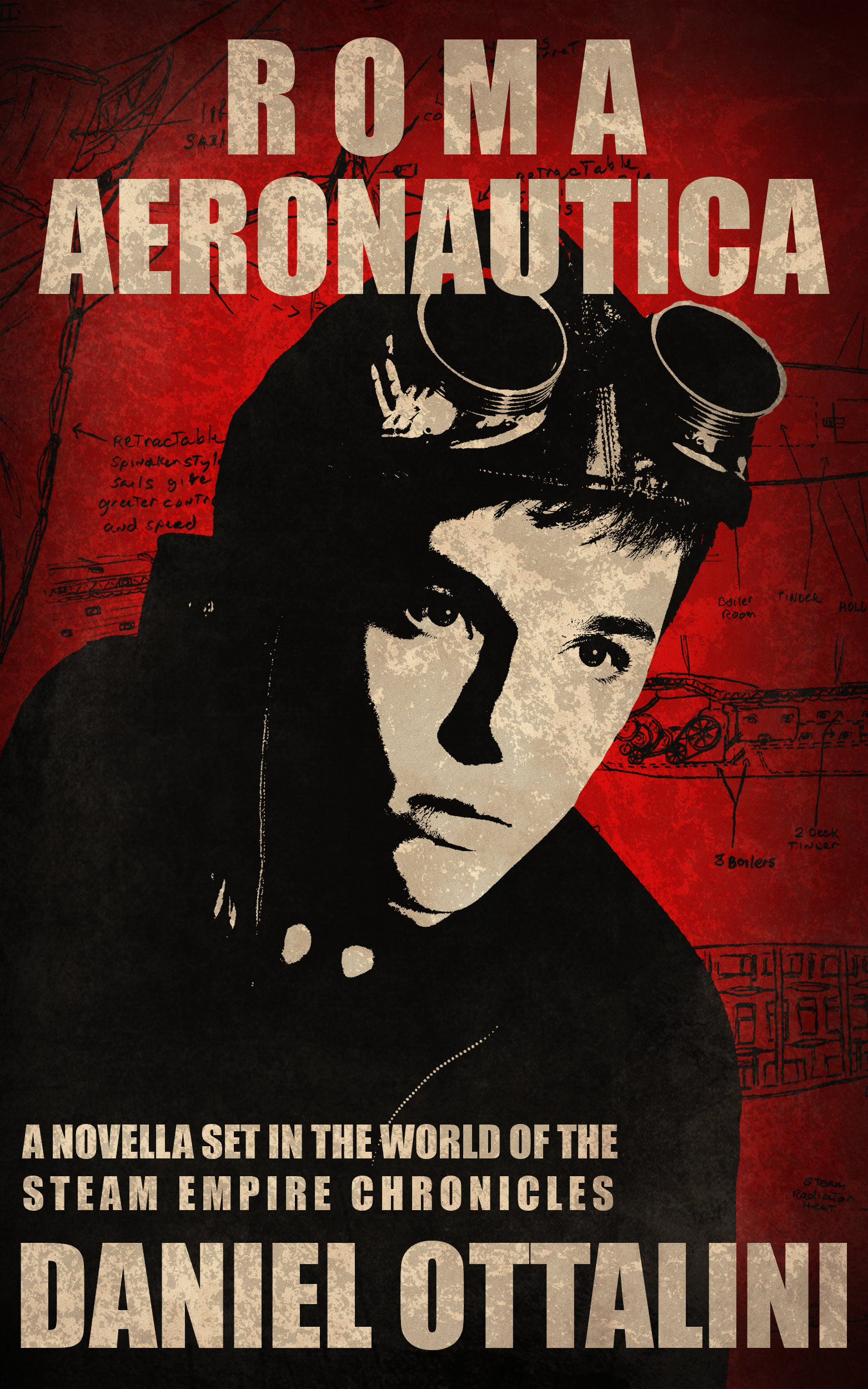
 

So what to learn from all of these? Sometimes, the best stories or ideas come by accident. Video Games, with their advanced computer programming, provide a companion to your own imagination and creativity. Even in my own novella, Roma Aeronautica, I used some ideas or concepts from video games such as Assassins Creed and even board games! So keep your eyes open, and your author’s senses tingling.

Ciao!


Finally, something new to post about.

A mini-posting that will lead to a future, bigger posting!


Long time no see! (That’s what being in the real world will get ya!)

So in case you hadn’t figured it out, I’ve been slammed with school recently. Plus, I’ve been finding it very hard to get motivated. The last chapter of Antioch Burns is sitting there, staring at me, practically begging me to pick it up and dominate it into the ground. And yet…I struggle. Pah, the struggle of a young author…

But I digress.

I should have something new for you blog wise tomorrow. Maybe then you’ll figure out what else has been draining my time, so to speak.

Oh, and did I mention that Antioch Burns’ cover is in the works now (finally!). I’m super excited to see it, it should look really cool and mesh well with the story…. In the meantime, stay focused, my friends.

Ciao

How to deal with Failure

How to deal with failure – an observation and commentary.


By Daniel Ottalini

man-yelling-at-computerEveryone fails. Be honest here. At some point in your life, you will fail at something. Maybe it’s not getting that promotion or being told you’re being let go. Maybe it is part of your hobby or something within your family. Maybe it even involves your writing. But everyone has that point where they are face to face with failure.

So…how do you deal with it? How do you get beyond the feeling that you’ve done everything wrong and it is all your fault?

First, get back on your feet. Realize that sometimes, you did everything right (or ‘write’ so-to-speak), and it still wasn’t good enough for the situation.

Second, learn from the failure. Thomas Edison spent years trying to invent a lightbulb. When asked why he didn’t give up, he responded (paraphrase form) that he didn’t just fail to invent a lightbulb, but he discovered 100 ways how not to make a lightbulb. So learn from your mistakes and failures. Personally, I’ve learned how to be a better communicator, a better author, and even a (slightly) better publicist because of my mistakes.

Third, be willing to ask for help. Sometimes, you will not know why it was that you failed. Your submission wasn’t accepted, or your proposal wasn’t picked. Obviously, not all situations will provide the opportunity to ask for feedback, but still it is helpful to ask. Any decent person in most fields with time and desire can provide you with feedback, and some will.

Finally, look for the support of your peers. This is why it is good practice for authors to get novels beta read before sending it off to the editor, and why professional authors have multiple editors examine their work. One person is not the end-all, be-all of authority and wisdom. Find a good support group and see how you can grow.

And when in doubt, take a hot shower, eat some chocolate, and go to bed early. That always helps too.

What is your novel worth?

For my self-published friends: What exactly is your book worth?


Hi everyone,

Sorry for the lack of postings/tweets/facebook messages, I’ve been stuck without my main computer! It died about two weeks ago and I’m still in limbo with it. I could replace the hard drive, but at this point, It may make more sense to simply get a new computer. Not sure yet.

Anywho, onto my main post.

As self-published authors, we are always facing the latest push to devalue our work. The average pricing for an ebook dropped roughly 50% this last year, according to a recent study. (I’ll find the source, but heard it on the radio!) So even the main stream publishers are facing pressure to reduce the price of their work. Understandably, there is pressure on self-published authors to get our work in ‘under the wire’ so to speak, at a reduced price, because hey, everyone likes a deal, right?

Consider what goes into making a book: Time + Money + Effort = Finished Product. You spend hours writing, revising, fixing a novel. Then you probably spend money sending it to someone else to be edited, revised, tweaked. You spend money on getting good cover art because, hey, people DO judge a book by it’s cover. You put in effort to promote, to network, to do all the legwork yourself or with only a few volunteers.

Face it: You, the self-published (or small-published) author works incredibly hard for your money. Why should you not ask people to pay for your work? And not just a pittance either. $0.99? for a full length novel?

If you spent $1,000 crafting your novel, and you sell it for 99 cents, using Amazon’s algorithm (i.e – 35% of each sale is yours), you would have to sell 2800 copies of your novel just to break even. Before any advertising & such. I once heard a quote somewhere that said the vast majority of self-published authors never sell more than 50 books.

Sell your novel for 1.99, you make 66 cents each book – you’ve cut the number of books needed to break even down to 1500. Already you’re doing a lot better. Up it to $2.99, and now you’re making 70% of each sale, 2.09 – now you only need to sell 478 novels sold.

If you truly think your work is only worth 99 cents, then sell it for that amount. Sometimes people ask me why my novella isn’t 99 cents. Because I don’t think it is worth that. Will I reduce the price in the future? Maybe. It is a short novella. But true fans will buy your work, regardless of whether it is 99 cents or 1.99 or 2.99. A true fan will not ignore your work because it costs a dollar more. Then it is simply someone who is out looking for 99 cent books, not someone looking for you.

So what is the point of this? Readers believe that everything should be cheap or free. But quality has a price. If you want readers to come to you because of the quality of your work, price it accordingly.

Thanks for letting me rant 🙂

Here’s what some other people have said…


Mini-Competition Opportunity!

Win a copy of Roma Aeronautica!


Hi Everyone!

If you’ve been waiting to get your hands on Roma Aeronautica, now is the time! I’ve just started a competition for all my loyal readers! If you can figure out how to access the new novella page on my website, Brasslegionnaire.com, you’ll find a key word! Be one of the first five people to message me about it (Or tweet, fb post, etc) and you’ll win a free copy!

It’s pretty easy, so why wouldn’t you go for it?

Ciao!


Why don’t we see more ‘Alternate’ Steampunk?

Why don’t we see more ‘Alternate’ Steampunk?


I was checking out my Amazon Author Page the other day, and happened to be reading the reviews that people have given. I was struck by the comments in several, in particular those that said my novel was a great read for someone looking for something other than the usual Victorian steampunk. I’m flattered by these comments, but it had me thinking, why don’t we see more ‘alternate’ steampunk novels? (You can see more about how to respond to reviews here)

I suppose this question is answered in the most basic form by looking at the origin of

Virtuoso by Jon Munger and Krista Brennan

the word steampunk. “Steampunk is a sub-genre of science fiction that typically features steam-powered machinery,especially in a setting inspired by industrialized Western civilization during the 19th century.” (According to Wikipedia) or if you prefer Urban Dictionary, “What the past would look like if the future had happened sooner.”

So that gives some insight, but not enough. You have to look at the words 19th century and western civilization. Most Steampunk happens in Victorian (or proto-victorian) England/ Western Europe or in the wild west. Even those novels that don’t explicitly take place in those locations include people from those locations. Peshawar Lancers, by S.M. Stirling, takes place in India, but a Englishized India.

So why do we not see more steampunk writing from the Far East? Or Africa? South America? People write what they know, and what they’ve learned. If you’re an American or British writer, you probably know western history with a spattering of eastern history when it coincides with western. I would LOVE to write a steampunk novel about Brazil (and I’ve actually got one way way wayyyy on the backburner in idea form) but I happen to have a great resource who grew up in Brazil as a major partner in it. If left to my own devices, could I write a novel? Sure, but I doubt it would be truly authentic. Steampunk doesn’t have to be authentic (it is, after all, science fiction), but the culture it is based on does need to feel and act authentic. If you don’t know about a different culture, how can you write about it?

There are a few authors who are trying to breach the boundaries of ‘traditional’ steampunk, but you’ll have to look good and hard for them. If you have any suggestions, leave them below and I’ll edit the post. I’d love to read some other non-standard steampunk ideas. For more information, check out this great post on Beyond Victoriana.


Roma Aeronautica Out Today!

My new Novella, Roma Aeronautica, is out today! Click to get a quick synopsis and learn where to purchase this fast paced coming-of-age story.


Roma-Aeronautica-2500x1563Hi everyone! I hope your summer is going well, mine is so far, when it isn’t full of work! I am excited to announce that my new novella, Roma Aeronautica, is available for purchase on both Amazon and Barnes & Noble (and will be up on Smashwords for iPad owners/etc., as soon as possible!). Roma Aeronautica takes place in the same world as the Steam Empire Chronicles, and would be described as a character prequel.

Continue reading “Roma Aeronautica Out Today!”

Do you need a separate blog and book website?

Should you go with just an Author Blog or both a Blog and Book Website? My take on this tricky question for self-published authors.


Greetings all!

A close friend of mine is in the process of publishing her novel. She asked me whether or not she should create a separate book website similar to mine, to go with her author/personal blog. It’s a great question that I wanted to share with you, my loyal readers.

Pros of Going with a Book Blog and Website

1.) If you ever plan to write about a different series/world/genre, it helps to differentiate. For example, lets say I suddenly decided to write about paranormal fantasy. Most people reading this blog wouldn’t be extremely interested. But I could continue to update my book website with small tidbits and bonus features. Alternatively, I could create a book website just for my new series, and keep this current blog focused on alternate history and steampunk (A much better idea).

2.) Flexibility – different sites offer different capabilities. Some require a lot of money to really stretch the boundaries, or a personal web designer. I also like having a separate site because I can send people to the Wix site via mobile or through my business cards. It looks professional and is topic specific – focusing on the novel, not on self-publishing as a whole.

3.) Fan Support – A book website with a forum can allow fans to discuss and present their ideas on that site, and allow you to monitor your readers’ ideas and input, without having to sift through different areas.

Cons of Going with a Book Blog and Website

website is down

1.) Time – You have to make and upkeep two separate sites. My Wix site is still waiting to be updated with Roma Aeronautica’s information. That’s on the agenda for this weekend.

2.) Money – You have to pay to host two websites. Or alternatively, deal with annoying free ads and such. It depends on your own choices too. brasslegionnaire.com is a lot more professional sounding than wix.brasslegionnaire.com after all.

3.) Separation of readers – This is a possibility if you have multiple blogs. You can separate your readership and reduce traffic to each site individually. That being said, you can also allow specific segments of your readership to ignore parts that they don’t care about, and focus more on what they enjoy and like!

So looking back, what would I recommend?

Well, personally, seeing as how I already have two sites and plan on building the world of the Steam Empire Chronicles to include ten different stories, I think a separate site for them is great! Especially when I plan on creating an additional series or world.

Would I recommend two sites to a beginner? Absolutely not. If you want to blog, then you should focus on creating a blog and building that audience faithfully and consistently. Small steps are easier to take, rather than big leaps.

What do you think? One or two sites? More?