Day 15 – How to Write Plot Twists

Let’s explore plot twists in depth.


Hi everyone!

Today I want to talk about everyone’s favorite point in a novel – the plot twist. Whether you’re a reader, a writer, an author, a movie-goer or a television watcher, you’re familiar with the plot twist. Everything is going perfectly fine (or at least, in the same, expected direction) and then suddenly, a key component of the story is spun on it’s head. This forces the reader/viewer to adapt or even change their opinions about a character, event, or challenge.

Continue reading “Day 15 – How to Write Plot Twists”

Day 14 – Almost Halfway There

What other things would you like me to blog about? Provide your input after the article!


Salve!

For today’s post, I’m going to actually ask a question of my readers. What would be something you’d like to read an article about? As I’ve discussed before, my two most popular articles are those written about how to kill characters in novels. Gruesome (and highly entertaining) to write about – especially since I don’t take myself seriously in this regard. But what would be some articles you’d like to see? I can’t profess to being an expert at the craft of writing, but I do have experience and some thoughts/opinions about certain things.

Read more beyond the break

Continue reading “Day 14 – Almost Halfway There”

Five Ways to Keep Your Self-Publishing Clients Happy & Coming Back for More

Five great tips for self-publishing support staff – editors, illustrators, small publishers, etc. Keep your sanity while keeping your clients happy and coming back for more!


By Daniel Ottalini

You want to have all your bases and operations covered!

Hi all, this is a companion piece to my earlier article on how to make sure that your freelancers/self-publishing helpers do their best for you. But what about the flip side? What can you, as a freelance/small business editor, cover artist, etc., do to make sure that you give your customers what they want, keep them coming back, but also make money and keep your dignity in the process? Continue reading “Five Ways to Keep Your Self-Publishing Clients Happy & Coming Back for More”

Four Ways to Know if Your Self-Publishing Contractors are Good for You

For my Self-Published friends – we’ve all had some horror stories! Here’s four ways to find, pick, and work with the best self-publishing support staff people around!


By Daniel Ottalini

What happens when a freelancer and an author work together.

Hi all! There’s been a lot of press recently about small publishers and self-publisher

support staff – ie formatters, editors, cover artists, designers, small publishers, other freelancers, etc – leaving their hard-working clients in the dust and disappearing with authors’ hard earned money. In lieu of that, I thought long and hard about some ways that authors can tell if who they’re working with is the real deal, or a real stinker. Continue reading “Four Ways to Know if Your Self-Publishing Contractors are Good for You”

Three Easy Ways to balance your Personal Life and Writing Life

For those writers out there struggling to stay focused – 3 Ways to Balance our Personal and Writing Lives!


By Daniel Ottalini

If he had a watch, he'd be making sure to stay on schedule
If he had a watch, Julius would be making sure to stay on schedule.

If you’re anything like me, you’ve got a life. No really, a life! You know, a life outside of the world(s) you create on the electronic page? One filled with friends, family, another job/career, a hobby or interest, vacations, etc. And those parts of your life have requirements. I have to work a certain number of hours a day, between X and Y. I want (and need) to hang out with my family on this date all day long, etc etc. The boys and I will be going to the hockey game next Friday. All of these are great examples of life impacting you and your time.

Continue reading “Three Easy Ways to balance your Personal Life and Writing Life”

Tax Help for the Self-Published Author

Tax help for the Self-Published or Soon to be Self-Published Author


taxespicBefore I begin, let me state that I am not a tax pro, CPA, etc etc. These are just tips I’ve accumulated over the years.

By Daniel Ottalini

Are you a writer? Got a brand new novel out and selling tons of copies! Wonderful! Uncle Sam would like some of your money!

Bummer. Here’s some things to do to ensure you get the most out of your self-publishing career.

1.) Keep records of all your expenditures. Did you have someone edit your book? Format it? Design a cover? A webpage? Did you pay for web hosting services? Great! You can write all that off against the income you made from your book! For example, this year I had Copper Centurion edited, formatted, had a cover made for it and Antioch Burns, along with Roma Aeronautica. All the money I spent on those I can write off against the income I made from the books. Be wary, depending on how much you spent, you may need to send some additional tax forms, but I have yet to have that happen to me.

2.) Don’t file until you have all your information. Make sure you have all your 1098-MISC forms before submitting your taxes, and if you use something like TurboTax, that keeps track from year to year, make sure you check the names on the MISC forms, as some have changed, such as Amazon, which has changed the name of Createspace and some other platforms a few times.

3.) Remember Home Office, Travel, and Professional Dues credits/deductions – This year I traveled to Portland, Oregon as part of the EPIC Convention. I could deduct a lot of the expenses I had there. Some people would say you could deduct everything, and that may be true, but you really need very good receipt tracking and book keeping for that. As far as home office goes, remember that you’re supposed to use the home office only for your ‘official’ work. So your generic home computer really doesn’t fly. BUT postage for kickstarter items, car rental for the convention, that does work! (And when I get a fancy new laptop, hint hint birthday genie, I may be able to write that off as well (provided I purchase it)).

4.) Realize you should have done a much better job of book keeping this year and resolve to do it better next year.

5.) Create a checking account you use just for book-related purchases and such, that way you can keep personal and ‘self-published’ things separate. Then stick to it!

6.) When all else fails, hire a professional.

❤ Ciao!

Do You Need a Glossary?

Do you need a Glossary? – Tips and Tricks for the Self-Published Author on creating a helpful glossary.


Hey there all you self-published writers!

Got a big book you’re about to bring out?

Does it have…

  1. A million characters to keep track of (Ala Robert Jordan, Tolkien, or Martin?)
  2. Words in another language (Real, made up, modified – this is me!)
  3. obscure military, technological, or scientific terms?
  4. a PhD worth of terminology?
  5. A fantasy world of made up locations, animals, magic, etc?

Then you, my dear compatriot, probably need a glossary.

Some simple rules to follow when creating a glossary.

  1. Follow my Significant Other’s rule – if she doesn’t know what it is, the average reader won’t (I.E. Better to leave it in than keep it out of the glossary)
  2. Add the humor or additional backstory – the glossary is a great place to add sneaky extra bits of information, backstory, or other fun, world building tidbits.
  3. But be careful – don’t say it is one thing in book one, then something different in book two.
  4. Find some examples from great fantasy books to help you out.
  5. When in doubt, ask your editor or beta readers to underline or identify the words they didn’t know to help you out!

There you have it! I hope this helped! Glossaries can really make your book much more approachable, and people will love finding those hidden ‘easter eggs’ in the back of your book (but never tell them where to look, it is more fun to find them on your own!)

Top Video Games for “Researching” Your Alternate History Novel

How to use video games as ‘research’ for your alternate history or historical fiction novel (or just for fun!). Check it out!


By Daniel Ottalini

Every great writer takes influence and ideas from their surroundings. Nature, society, repression, upheaval, relationships, food – they all play a role in building or creating art and literature. Need Proof? (See War and Peace). For writers of Alternate History, Steampunk, or alternative worlds, where is our guidance, our focus, our tree of knowledge?Certainly, the great author Jules Verne, the enthusiastic enlightenment (and darker side) of the English Victorian era, the rugged styling of the American Wild West, all play a part. But within those come predictable, static ideas in some ways, a lack of new frontiers. I have heard complaints before, even written about them, about Steampunk being so West centric that it excludes such an incredible variety of other cultures. How can you, as an author, delve deeper into the ‘what ifs?’ and create a storyline of you own?

Simple. Lead that culture (technologically and metaphorically speaking, of course), through one of these thought provoking and challenging video games. Some of which you’ve heard, and others you may not have.

In Personal Favorite Order

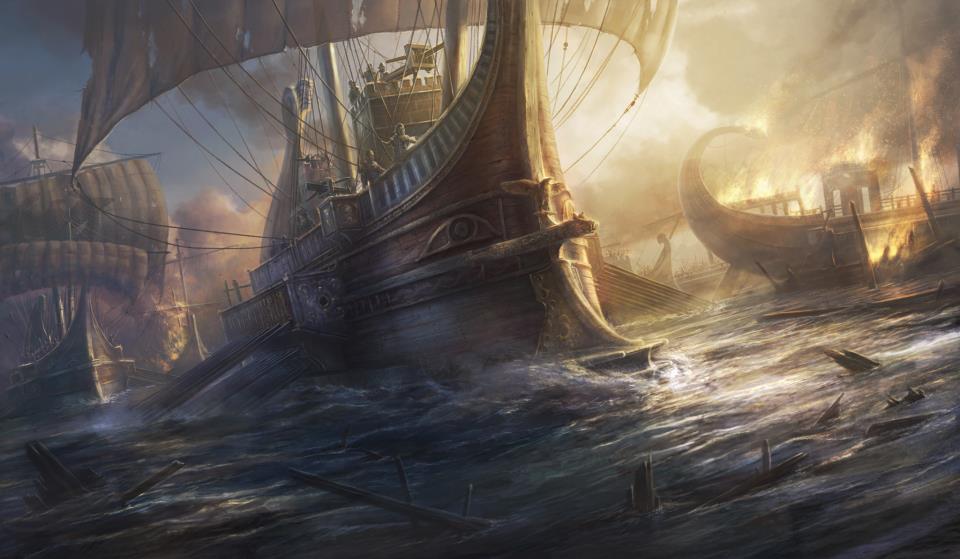
Total War: Rome 2– Great game, one of many in the Total war series – Take a nation/culture from beginnings to world power. Lots of Mods as well, to enhance or modify your experience. Total War is unique in that it offers both civilization building/city construction component and a Real Time Strategy combat component. Excellent, waste-all-your-weekend without your knowledge game. Lends itself well to battle scene writing, as well as overall story planning.

Sid Meier’s Civilization V– The game that started my love of country and computer nation building simulation. (Well, to be honest, it was Civilization II, not V, but that’s just dating my young self). Cultures have different abilities, less RTS, as Civ is turn based, but incorporating religion, trade, technology, even tourism and unique civilization units and buildings in the most recent DLCs. Great game to practice ‘what-ifs’ – as in, What if the Brazilians embraced Orthodox Christianity and proceeded to crusade against all their Catholic neighbors?

Europa Universalis IV– Was slightly apprehensive to play this after already playing Crusader Kings 2. Paradox makes a great game with a complicated and wondrous system, but I was thinking it would be more of the same. Similar, yes, but the same? No. This is an amazing Alternate History game. No winners, unless you count taking your  nation to prosperity starting in the late 1400s. Just left playing a game where the Ottomans conquered the Byzantines, were then counter invaded by a crusade of Spanish and Bosnians, who forced the Ottomans to release the Byzantines as a freed country, to survive and exist and eventually conquer all of Greece and the Balkans. Seriously, you can’t make that stuff up, but it happened. Without human input. Simply goes to show you how useful such a great game can be. (Who did I play? The Scottish, who annexed Ireland, Wales, and is in the process of forcing the English back into the ocean… Oh, and I’ve colonized most of NE Canada and the USA.) Good for post middle ages, but pre-WWI, Napoleonic Era.

Crusader Kings II– Another Paradox game, similar to the gameplay found in Europa Universalis. Political intrigue, fabricating claims, building alliances, royal marriages, plus character traits that really impact your ‘persona’ in game. Once played as a dwarf king (as in small person, not fantasy) who was both lecherous and chaste at the same time. Not sure how that happens. Good for some interesting character combinations, and learning more about the complexity of the political system in Europe during the middle ages. (Game starts with the Norman invasion of England)


So what to learn from all of these? Sometimes, the best stories or ideas come by accident. Video Games, with their advanced computer programming, provide a companion to your own imagination and creativity. Even in my own novella, Roma Aeronautica, I used some ideas or concepts from video games such as Assassins Creed and even board games! So keep your eyes open, and your author’s senses tingling.

Ciao!


Do you need a separate blog and book website?

Should you go with just an Author Blog or both a Blog and Book Website? My take on this tricky question for self-published authors.


Greetings all!

A close friend of mine is in the process of publishing her novel. She asked me whether or not she should create a separate book website similar to mine, to go with her author/personal blog. It’s a great question that I wanted to share with you, my loyal readers.

Pros of Going with a Book Blog and Website

1.) If you ever plan to write about a different series/world/genre, it helps to differentiate. For example, lets say I suddenly decided to write about paranormal fantasy. Most people reading this blog wouldn’t be extremely interested. But I could continue to update my book website with small tidbits and bonus features. Alternatively, I could create a book website just for my new series, and keep this current blog focused on alternate history and steampunk (A much better idea).

2.) Flexibility – different sites offer different capabilities. Some require a lot of money to really stretch the boundaries, or a personal web designer. I also like having a separate site because I can send people to the Wix site via mobile or through my business cards. It looks professional and is topic specific – focusing on the novel, not on self-publishing as a whole.

3.) Fan Support – A book website with a forum can allow fans to discuss and present their ideas on that site, and allow you to monitor your readers’ ideas and input, without having to sift through different areas.

Cons of Going with a Book Blog and Website

website is down

1.) Time – You have to make and upkeep two separate sites. My Wix site is still waiting to be updated with Roma Aeronautica’s information. That’s on the agenda for this weekend.

2.) Money – You have to pay to host two websites. Or alternatively, deal with annoying free ads and such. It depends on your own choices too. brasslegionnaire.com is a lot more professional sounding than wix.brasslegionnaire.com after all.

3.) Separation of readers – This is a possibility if you have multiple blogs. You can separate your readership and reduce traffic to each site individually. That being said, you can also allow specific segments of your readership to ignore parts that they don’t care about, and focus more on what they enjoy and like!

So looking back, what would I recommend?

Well, personally, seeing as how I already have two sites and plan on building the world of the Steam Empire Chronicles to include ten different stories, I think a separate site for them is great! Especially when I plan on creating an additional series or world.

Would I recommend two sites to a beginner? Absolutely not. If you want to blog, then you should focus on creating a blog and building that audience faithfully and consistently. Small steps are easier to take, rather than big leaps.

What do you think? One or two sites? More?

How to Beat Writer’s Block

Brief Posting on Defeating Writer’s Block


Hi all,

Had a terrible case of writer’s block the last few days (Okay, weeks. I think Lisa, the publisher of Antioch Burns, was having conniption fits.) But seriously, nothing was working. I was really unfocused and could not connect one idea to another. So how did I break it? Well, I think it’s a combination of factors, but here’s what I’ve got so far.images

    1. Got a lot of sleep (seriously, a tired brain doesn’t always think straight)
    2. Stayed up late (in opposition to the prior one, I stayed up late once I finally broke through!)
    3. Listened to classical music from Kingdom Of Heaven.
    4. Alternatively, you could have also watched scenes from that, or any other movie/film connected to your genre.
    5. Went for a walk. Without the iPod.
    6. Drove home without listening to the radio. (Both E and F make you think, because you have nothing to distract you.)
    7. Text/Phone a friend (Who recommend I go for a walk. Thanks Lys!)

Breaking through netted me a sweet 1k words in Antioch Burns, plus a long range pat on the back from my publisher. 🙂 Anywho, short posting today. What else do you do to defeat writer’s block?

ships
Alternatively, look up inspirational photos online! (This is from the upcoming Rome Total War II game.)