Five Ways to become a better Self-Published Author
Hi all,
Before I published Brass Legionnaire, I stumbled across many a website stating that you had to do this or you had to do that as a writer, author, self-publisher, etc etc etc. I think the best one I’ve found has to be here, as the sheer hilarity and slightly mocking tone both annoy you and make you realize that yes, you do need to do those things.
But that post is merely about being a better writer. I think it takes a special type of person to be a self-published writer/author. So I threw together a list on how to become a better self-published author – as always, take with a grain of salt. I’m not the best, but I certainly have some hard won experience on it by now.
An overview of Day 3 of EPICon and the top mistakes authors make when trying to get published.
Howdy all,
This will be my second posting about EPICon 2013 in Vancouver, Washington. Day three came early and dreary, as the near constant grey skies and overcast weather constantly seemed to try and intrude upon our learning adventure.
Day three focused on self-publishing and traditional publishing strategies. It also included an awesome eFiesta! Readers’ luncheon and Book Fair. Then the awards banquet that evening. So a very busy day!
As far as the self-publishing strategies and tips/tricks, I got a lot of very useful information from Ms. Kate Richards of Wizards in Publishing. She shared how critical it was that self-published authors find peer groups in their local areas to review and critique their work. As a self-published author, I can say that this is so critical for us. Self-published books get a bad name because there are people who don’t bother to make their book look, and read, well…professional.Critique groups and a healthy amount of beta readers can make any novel sound and flow better, before and after it is written. A good editor and a good cover artist are also important. And with editing, 99& of the time you get what you pay for. A cheap edit will frequently be a bad edit. Several writers at the convention shared horror stories about bad edits.
But Daniel, you cry, I don’t want to go broke with my editing! – That is where good critique groups and beta readers come in. They will help eliminate many of the more common issues before sending it to an editor. You shouldn’t need the most expensive editor out there, but someone who has experience (preferably with your genre) and an interest in your novel. Also look into contests that give critiques out as they can be exceptionally valuable too!
By the way, there was also an editors/publisher panel where people asked questions and shared tidbits about each publishing house and their submissions policy. They all agreed that the biggest mistake people make when submitting a book is to a.) not follow guidelines and b.) Not follow guidelines by sending it to the wrong person or not sending their book at all!
Alright, more later! Have a great day! (My spring break starts today!) If you’re on spring break also and looking for a good read, check out my Award Winning novel! (I can say that now, still makes me smile with happiness!) for Kindle, Nook, or any of the other major platforms. Enjoy!
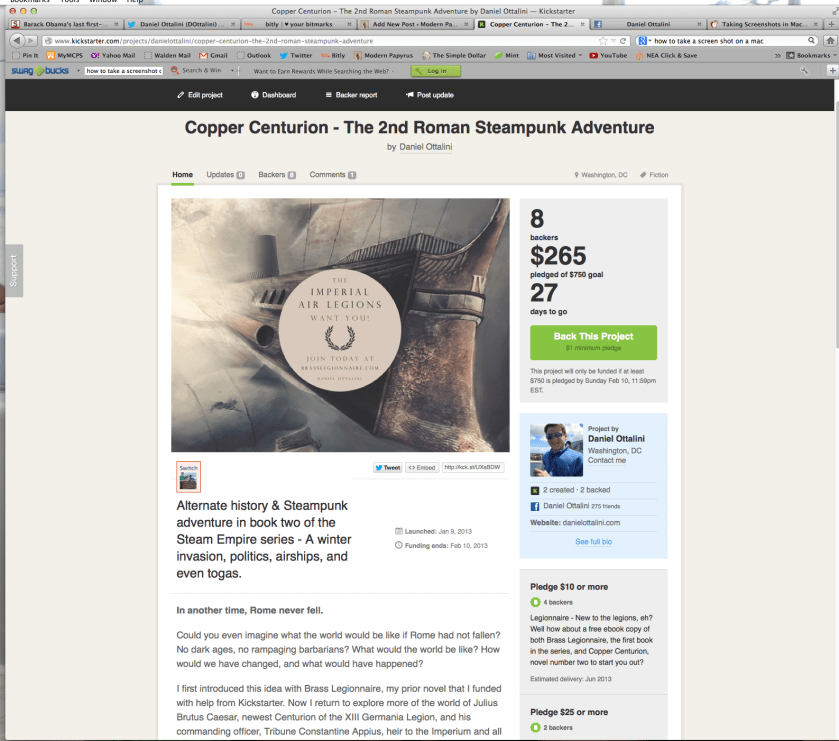
Hopefully by now, you’ve had a chance to check out my latest Kickstarter project and hopefully support me in my bid to publish Copper Centurion, the 2nd book of the Steam Empire Chronicles. I had quite a few people ask me in the last few days exactly what Kickstarter was! So prepare for a whirlwind tour of Kickstarter Nation.
What is Kickstarter?
Kickstarter is a funding platform for creative and awesome projects. This means that people looking to get a start in creating or producing something will find a home among the hundreds of thousands, if not millions, who support projects on kickstarter.
From the Kickstarter Website –
Everything on Kickstarter must be a project. A project has a clear goal, like making an album, a book, or a work of art. A project will eventually be completed, and something will be produced by it.
So what is the catch? Two actually. The first catch is that each project must be funded fully or beyond. So if you ask for $500 dollars, and only get $499, you get no money, zip, zilch, nadda. Which is good and bad. It doesn’t leave ‘partial’ projects hanging in limbo as creators try to secure other fundraising sources. The second catch is that each project creator must build reward tiers for each level of sponsorship. Pledge ten dollars to my project? You get a copy of both Brass Legionnaire and Copper Centurion ebooks. So in return for your money upfront, I give you a copy of what I’m working on (or have already finished). The rewards go up as the money goes up. I’ve seen people offer major characters in video games as rewards, names for product lines, given producer credit on albums, etc.
The only limits are pretty obvious – no weapons, no bribing (money for money or coupons for money) along with other banned substances. Kickstarter has more information, but really, be creative! My favorite tiers are the two highest because the rewards are the coolest! If you pledge $100, you get to create and name a character in Iron Tribune, my next full-length novel, and you can even choose his/her death. Of course, if you want something even cooler, you’ll pledge $250, which nets you all that plus a Roman Helmet. A legit helmet, not something you find in the dollar store.
But I digress. So rewards are the bread and butter of Kickstarter, but how to get rewards?! You must make your project cool. Kickstarter recommends making a video to promote your project. I plan on doing this, but the weather and light have not been cooperative, argh! But it also helps to have a social network out in advance – twitter, facebook fanpage, or email listserv. Alternatively, you can hit up friends and family to support to.
So there you have it – create your project, tell people why you need their hard earned money, then create your reward tiers, promote and voila! Hopefully a fully funded project. Oh, did I mention the time limit? 45-60 days max! And you must deliver on your rewards. Oh, and Amazon takes 5% of the money doled out in processing fees. So be aware, but then continue on! If there’s anything I learned, it is to start small – ask for $250 to help you get illustrations for your novel. Then see where it takes you!
Have any of you used Kickstarter? How did you like it? Were you successful?
This is the first post in a series entitled “Building a Better Book.” In this posting, I examine how to create an intriguing setting for your novel.
Greetings all! Welcome to the start of my new blog series “Building a Better Book”
In today’s episode, I’d like to talk a little about how to create a world that has elements of realism and fantasy (or science fiction, etc). For me, at least, building a world is all about three things.
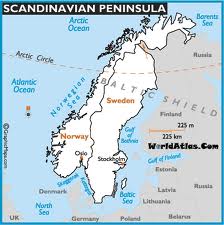
1.) How is your world realistic? – Does it connect to our world? Obviously, for some stories this is not practical, but even space operas have their share of realistic environments – space battleships with bridges that would probably seem familiar to any current navy sailor, planets that are Earth-like (or perhaps more Moon-Mars-or-Jupiter like, etc. If your story takes place on Earth (future, present, or past) it’s even easier. For Copper Centurion, much of the story takes place in Nortland, otherwise known as present day Sweden and Norway. So what did I do? I popped onto Google Maps to get a top down view, found some more ancient maps to do a cross analysis, then went to work. I looked for roadways and rivers to help decide on the routes that different characters would take in my story. Thus, the world impacts my story. Which brings me to point two…
2.) How does your world match your characters? Your world must match your characters in terms of realism. Soft fluffy creatures won’t live on a harsh, rocky mountain. It just doesn’t make sense! Now, you could do a “farm girl in the big city” type situation, where the setting impacts the character’s development, and that’s fine, but if you’re creating a whole world, then you have to put more thought into the setting. Now finally…
3.) What else could impact the world? What I mean by this is simply how does the technology level of your characters impact the story. A story set in Victorian England will most likely need to have heavy periods of fog and smog impacting the characters as they run around. A story taking place in the Canadian Rockies will probably involve snow. A story taking place in the Middle East during the Crusades will not only have undercurrents of religious conflict, but also desertification and the need for water.
So you see, when creating a world, you really do have to do some research. It really does help lend power to your novel or story if readers can identify with the place that they are reading about. But if you go ‘hyper-local’ you have to get it right, at least in a standard fiction novel. Otherwise, readers may eat you for lunch!
Well, that’s all for today! See you next time!
Ciao!
In case you were wondering how a full time teacher manages to write, here’s a quick look inside my writing time.
Greetings all, and thanks for checking back in. I know it’s been a rather warm summer, and I just got back from a two week vacation/moving out party for my brother, who has been studying abroad in Tokyo for the last year.
Needless to say, two weeks in a country where you don’t speak the language can be both terrifying and enlightening. Just depends on whether you ordered the right food or not! (s’cuse me, I did not order the live squid with red bean paste filling, I ordered that eggy looking thing over there…. oh, that’s sea urchin ovaries? no thanks, I’ll have the rice.) Anyways, I thought that the ‘where and how I like to write’ post would be best done right now, as it’s a wonderfully quick and easy posting. Simply put, I write everywhere when I can and as much as I can – being a full time teacher during the school year, you can’t be picky, although I do tend to prefer weekends. I don’t normally set a word count per day, but a general ‘be at this many pages by such and such date’ instead.
Not specific enough for you?
Okay, I start by outlining my book in a journal/notebook that I picked up from Barnes and Noble. I find it slightly funny that something from B&N gave birth to something that is now carried in their online store. Usually I do a ‘whole book in one page’ type thing, then I go chapter by chapter. I know some authors do a lot of outlining. Outline this story arch or that. I can’t do that, nor do I have the patience to do that. I’ve done much of it in my head already. Did I mention that I tend to like writing late at night, with some dramatic music on? Personal favorites are from the Lord of the Rings soundtrack or other classical musical masterpieces. Although a few modern hits do show up from time to time. Hopefully my neighbors don’t think I’m slightly insane!
Once I’ve outlined the chapters, I type them up. Sometimes I’ll refer back to my notes and sometimes I won’t. I’m fortunate enough to own both a mega desktop mac and a smaller laptop, so I took the laptop on my vacation and discovered that train rides are an AWESOME time to get stuff done. Between five airline flights, and probably a dozen train trips, I added around 10,000 words to Copper Centurion. I also sketched out the entire book in my notebook. You see, sometimes I’ll only outline the first half, then wait until I reach that point to continue the rest. I’m constantly tweaking and changing my story arcs. While the trains and planes may be loud, its loud white noise, not talking and cell phones, so I can concentrate. Otherwise, I need the music or silence to really focus on whats going onto the page.
After I finish writing this time, it’s off to the beta testers. I’ve been a lot busier this summer (even without a full time job) so I’m still only about halfway through CC, whereas last year I had finished Brass Legionnaire by this time. Goal is to finish it by end of October, and then let my beta readers have at it all of November. If you’re interested, PLEASE let me know, the more the merrier!
Oh, and I’ll be posting some lovely photos of the new digs later on for your voyeuristic enjoyment. But only if you are nice!
Hi everyone!
As a veteran reader, I’ve read my fair share of battle scenes over the years. Now, as a writer, I find myself rereading many of those older stories and novels to see how different authors have approached battle scenes. I’ve taken these lessons and applied them to both Brass Legionnaire and Copper Centurion, and will continue to add on what I’ve learned in future novels!
First off, there’s a huge difference between writing ancient or fantasy battle scenes and sci-fi ones. After all, your weaponry, tactics, skills, battlefield knowledge, and technology (or magic!) all play a roll in how, where, and why you will fight. Urban combat in a medieval city will not take months to play out, as you have to fight it out toe to toe with your opponent. Not so the modern or futuristic era, where you can kill a man hundreds of yards away, then duck down through the sewers to the hidden bunker created in the apartment complex over yonder.
But what about for steampunk? How can I write a good battle scene for my novel if they include a smattering of things for all eras? Well that’s where I’m here to help!
First, remember that conflict is never about the weapons. It’s about a fight between two people/sets of peoples. Sometimes, in steampunk, we authors have a tendency to focus on the awesome gadgetry rather than the stories. Gadgets are cool, but humanity needs to be the guiding force. So show me how the character is feeling as he chops down his opponent. I want to see through the targeting reticule with him, slice off the zombie’s head with her, I want to feel and hear and taste (the iron tang of blood in your mouth! – Okay, maybe a bit gruesome, but you get the point) War is hell, it is experience. It is not some pretty dainty thing. Don’t treat it as such.
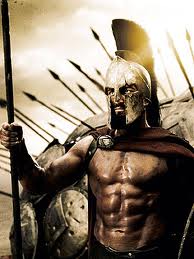
Leonidas is not pleased by your pitiful battle scene.
Second, do yourself a favor. Find a few movies that are in the time period closest to yours (or those with the closest weaponry-wise) and watch them. Not the extreme movies like 300, but rather a movie like Alexander. Think documentary over Hollywood flash. Don’t watch the newest “3 Musketeers” but find the original. Find a movie that shows you the battle panoramic style and close up. In other words – Do your research. While the weapons are not the focus of your story, they impact the use of tactics and how your army/soldiers fight. IE – My legionnaires are not going to charge a group of mechaniphants – They know perfectly well that they would get squashed. But they have created tactics to deal with them. you see the point.
Alternative – READ A BOOK(s)! Seriously – I read Julius Caesar’s The Conquest of Gaul prior to writing Brass Legionnaire. If you want people to take your battles seriously, demonstrate you understand what you are writing about.
Third, try to stay focused on one part of a scene at a time. I can’t count the number of times I’ve had to go back and reread a battle scene because I just didn’t understand what was happening. Sometimes, that’s the point, and the character is also lost in the ‘fog of war’ but then that should be in your writing. Jumping point of view can be a killer, and unless he is floating high above the battlefield, it’s hard to give him that ‘power’ to know what’s happening on the other flank in real time.
Fourth, your character is not a superhero. He/She will get tired, confused, wounded, exhausted, mad with rage, etc. Express that. I read a book once where a character sliced his way through half an opposing army. He had been a poor, simple, teenage farmer forty pages earlier, received no training, and then went to war. Realistic Result – Farmer dies on end of swordsman’s blade. Or runs away before hand.
I want to see growth and training. My characters may be Roman Legionnaires and have gone through difficult training, but they are still more deadly as part of a team, not as lone wolves. Besides, the idea that Conan the Barbarian will destroy the bad guy’s army single-handed is a bit overdone, don’t you think? And remember, most real battles ended due to the arrival of nighttime or one side fleeing. Very rarely did the losing side stay around to get pummeled into the ground. Terrain or circumstance forced that.
Finally, Don’t make your opponents cardboard props. They shouldn’t be dumb and flat, they should be sneaky, conniving, tricky. They should have motivation and a basic knowledge of tactics and warfare. Warlords get that way because they… go…to…war. They won’t lose all that knowledge the second they face your hero’s army. A talented opponent makes for a better story, a more engaging plot, and the chance for sequels.
Whew! There you have it! Five easy steps to writing awesome battle scenes. You can apply them to any era or type of battle, not just steampunky ones! Enjoy, and take a sneak peek of Copper Centurion below.
I’m about 20 thousand words in. For those of you keeping track, I have not, and won’t meet my goal of finishing it before the family vacation (six days or so away, no way I’ll be able to type 60k words or so!) But I promise you, I’m making progress! Copper Centurion involves a lot more airship combat and larger conflicts than Brass Legionnaire, so here’s a first look at an (unedited and un-beta-read) part of a larger airfleet combat. I’ve tried to follow all the rules listed above, but once again, this is a rough draft.
“Centurion, get your soldiers into position. They appear to be trying to double up on our airships. There’s more than we thought.” He shouted over the humming of the engines. The tempo of the large propellers had increased and Julius felt the ship move faster under his booted feet.
“Check your gear, lads. If you’ve got the grappler, remember to aim for the deck or something that can hold our weight as we cross on those ropes. Everyone else, clear the deck with your repeaters before you cross.” Julius passed on the orders from the briefing earlier. “Let’s not bring any extra things across. We go in fast, and either capture the ship or set the flares, and get off fast. The flares should do the work for us, but we have to get off before the fire spreads to the Scioparto. I don’t think the Captain would like that!” His voice felt full of false confidence as he gave the rallying speech to his men.
The enemy airships closed in tighter, from what Julius could tell. His view was blocked off to his left by the large bulk of the Scioparto’s gasbag and airship proper. Straight ahead, he could see several enemy airships closing fast on the line of Roman fliers headed straight at them. To Julius’ inexperienced eye, the airships seemed to vary little in design or shape, except that they had two airships that were as big as the Roman flagship. One was bearing down on the left flank of the Roman formation and the Scioparto.
The flagship began firing, joined by the ships flanking it to either side as the two lines clashed in mid air. The rolling line of explosions and the cacophony of battle started soft but were soon loud and immediate as the enemy airships closed in, engulfing the entirety of the formation. Julius counted twelve enemy warships, equaling their number. And those were just the ones he could see.
From below, the sounds of metal and wood screeching came as the ship’s artillery ports opened. Julius and the men of the XIII Germania watched, anticipating the first salvo from the Scioparto with glee. A larger vessel appeared to be sliding towards them, closing the space until it was just parallel to the smaller Scioparto.
All at once, the artillery on the Roman ship fired, launching a barrage of explosive missiles at the Nortland vessel. This time, the artillery crews fired as fast as possible, joined by the smaller pieces on the exposed deck. Julius’ legionnaires tried to shield the exposed aircrews as they fired their lightweight weaponry. When the breeze blew away the smoke and fog of war that obscured their damage, Julius’ eyes went wide in surprise and he cried out in alarm.



 Modern Papyrus